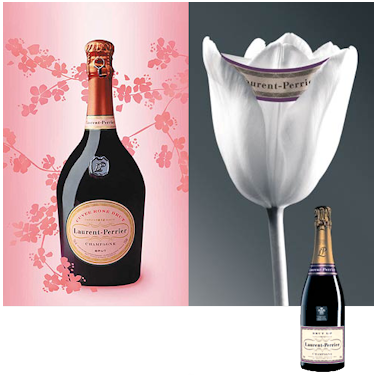
Laurent Perrier
The House of Laurent Perrier can lay claim to another famous Champagne widow. In 1881 Alphonse Pierlot gifted his Champagne House to his cellar master Eugene Laurent, who only lasted until 1887 when his widow Mathilde-Emilie Perrier took control of Veuve Laurent-Perrier & Cie.
Mathilde guided the company through the early years of the 20th Century and the ravages of World War I. On her death in 1925, Eugenie Laurent inherited the company, but was unable to steer a successful path through the difficult inter-war years and in 1939, with another war looming, sold Laurent-Perrier to Marie-Louise Lanson de Nonancourt, who's family still run the company today.
Success for Laurent-Perrier came in the post-War years with the House joining the ranks of the more famous names. Their multi-vintage prestige cuvée - Grand Siécle - was launched in 1959, and the iconic saignée method rosé followed in 1968.

Non Vintage France
Chardonnay is the dominant grape variety and its proportion is unusually high for a non-vintage champagne blend, being double the average. The blend is made of wines from more than 55 crus or villages and between 10 and 20% of reserve wines are used. Brut L-P is aged on its lees for approximately three years and only a very light dosage is used to preserve its balance and natural freshness.
Vintage France
A distinctive golden yellow hue with green highlights and a fruity character, revealing the wine's maturity, the aroma evolves into notes of ripe fruits, and acacia honey. The Vintage 2002 beautifully captures Laurent-Perrier's House style of lightness, freshness and elegance imparted by the chardonnays of Côte des Blancs Grand Crus and pinot noirs of Montagne de Reims.
Non Vintage Rosé France
One time favourite of the City traders, iconic in itself, still a favourite among those looking for a fuller and fruitier Rosé.
Non Vintage France
Quarter-bottles
Chardonnay is the dominant grape variety and its proportion is unusually high for a non-vintage champagne blend, being double the average. The blend is made of wines from more than 55 crus or villages and between 10 and 20% of reserve wines are used. Brut L-P is aged on its lees for approximately three years and only a very light dosage is used to preserve its balance and natural freshness.


