As I climbed the steps up to the plane on a warm, sunny evening, at the end of a frenetic week in Bordeaux, I found myself reflecting on just how differently I felt compared to a few days earlier.
It’s no secret that Bordeaux is facing a moment of real challenge.
Setting off at 4:30am the previous Sunday, I’ll admit I felt a degree of scepticism. Perhaps even a touch of despair about the situation. Over the past 15 years, steady price increases, not always justified, have begun to upset many long-standing supporters. Those rises were easier to accept in a buoyant market; less so in the past 18 months. The market has stalled and, in places, retreated. Add to that the pressures of global economics and geopolitics, and it’s understandable that many are questioning the relevance of En Primeur today.
So, it was something of a surprise to leave Bordeaux feeling somewhat reassured, a little energised, even – by what I had seen, heard and, most importantly, tasted.
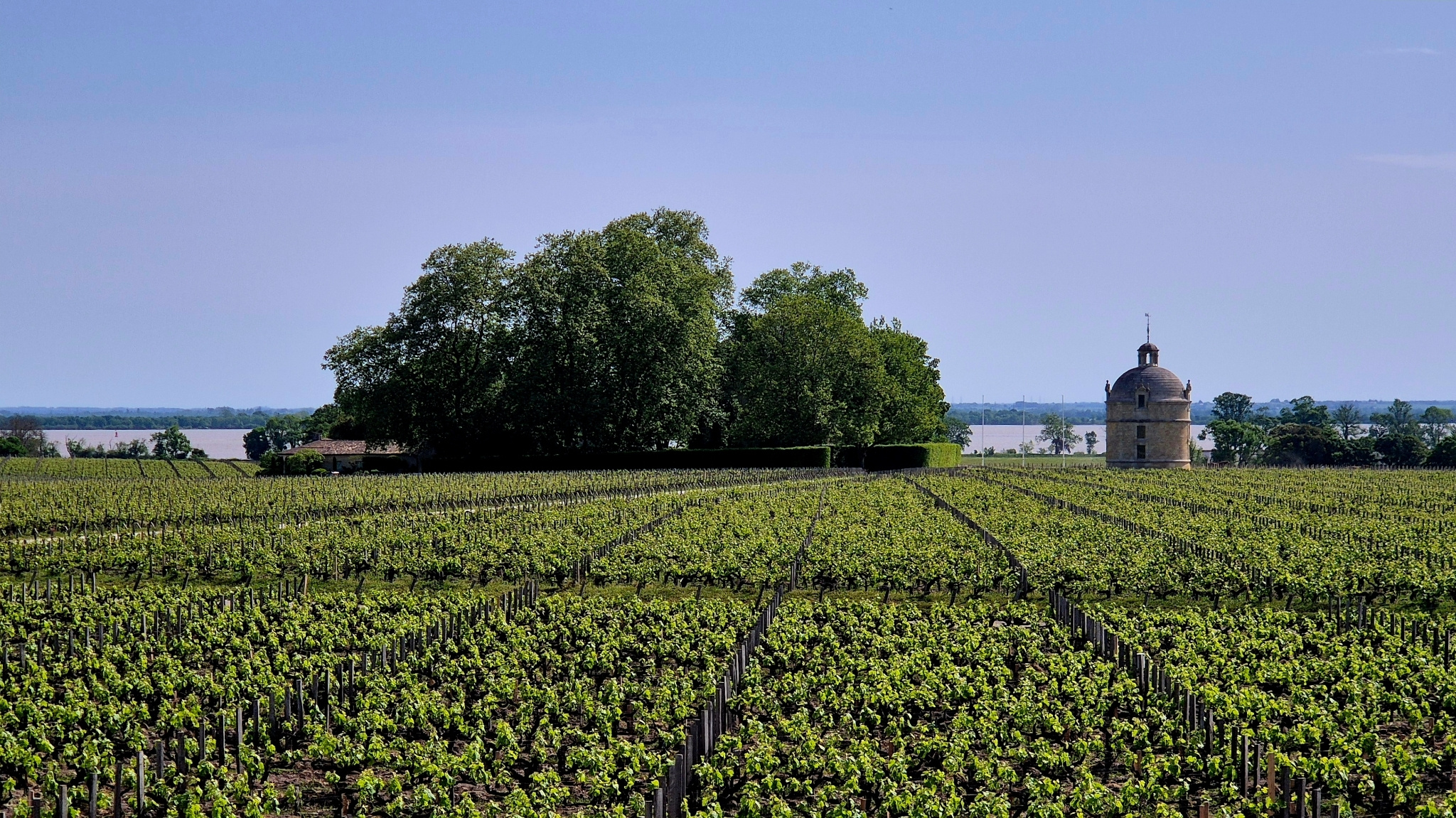
The view from Pichon Lalande towards the Gironde, overlooking Château Latour
After more than 40 château visits, countless conversations with winemakers and technical teams, and numerous larger tastings across the region, I was reminded exactly why Bordeaux has thrived for centuries. It remains resourceful, forward-thinking and remarkably adaptable. The current generation of winemakers and viticulturists are operating at an exceptionally high level. In 2025, that expertise has truly been tested.
How is the vintage?
This could easily have been a difficult vintage. Conditions were hot and dry, with parts of the Right Bank seeing virtually no rain from May through to August. There were heat spikes, drought conditions and real concerns around hydric stress. And yet, somewhat remarkably, the resulting wines are fresh, balanced and deeply compelling, with a sense of cool precision and, in many cases, surprisingly modest alcohol levels: just 12.7% at estates such as Cheval Blanc and Château Pedesclaux, for example.
The Bordelais are acutely aware of the commercial pressures they face and, in many cases, have limited room for manoeuvre. I heard from more than one well-known château that, following two small harvests, they are effectively operating at a loss, and yet still reduced prices in 2024. It is a delicate balancing act, and one that will inevitably shape the campaign ahead.


The superb new cellars at Leoville Barton | Lilian, Melanie & Damien Barton-Sartorious celebrating 200 years at the property.
The weather and climate.
The growing season itself was fascinating. A mild, damp winter and further spring rainfall added to the good water reserves after the wet months of 2024. Warm conditions led to an early and even flowering, though the legacy of the previous year meant reduced bud fruitfulness, setting the stage for naturally lower yields.
What followed was a predominantly warm, dry summer, punctuated by periods of intense heat, with temperatures occasionally climbing into the low-to-mid 40s. Crucially, however, unlike some recent hot vintages, nights remained notably cool. This diurnal shift proved vital, preserving acidity, building aromatic complexity and maintaining freshness, preventing the wines from tipping into over-ripeness.
Rain at the end of August arrived at exactly the right moment, accompanied by a slight cooling of temperatures. This allowed the vines to complete ripening without stress, achieving full phenolic maturity while keeping alcohol levels in check. Those prepared to hold their nerve and wait through the brief botrytis risk were rewarded with beautifully ripe, balanced fruit.
The outcome is small berries, low yields and impressive concentration but, importantly, without excess. In many ways, nature made things look challenging, but ultimately delivered near-perfect timing, producing healthy fruit with minimal disease pressure and allowing winemakers to focus on precision in the cellar.
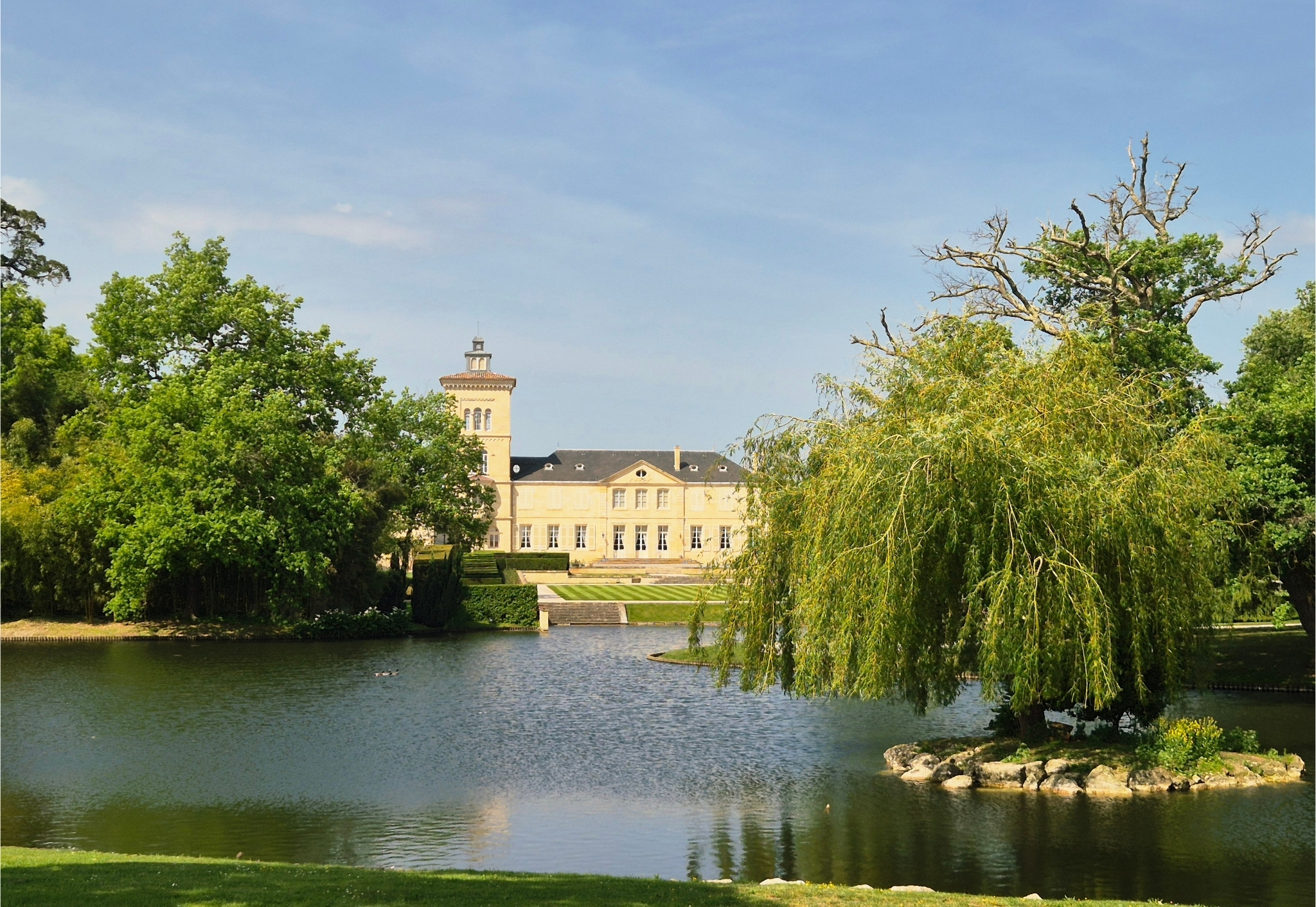
Château Lagrange
As Matthieu Borde of Château Lagrange neatly summarised, there were two key pitfalls to avoid. The first was picking too early: a warm but not overly hot September, combined with cool nights, allowed for full phenolic ripeness without excessive sugar accumulation. The second was over-extraction. In 2025, the grapes required very little encouragement to release colour, flavour and tannin.
The winemaking.
The best producers responded accordingly, adopting a light touch in the winery – gentle extraction, lower fermentation temperatures and more considered use of oak. There is an increasing shift towards larger-format vessels, concrete and even amphorae, reducing the dominance of small new barriques. The result is a style that harnesses purity and gives balance and energy over sheer power.
What stands out most in 2025 is the balance. These are wines that combine ripe, concentrated fruit with freshness, moderate alcohol and finely judged structure. They are deeply coloured, with expressive yet poised fruit profiles, and a real sense of lift and vibrancy. Tannins are present but beautifully refined, providing structure without heaviness. There is a precision and transparency here that is not always found in warmer vintages.
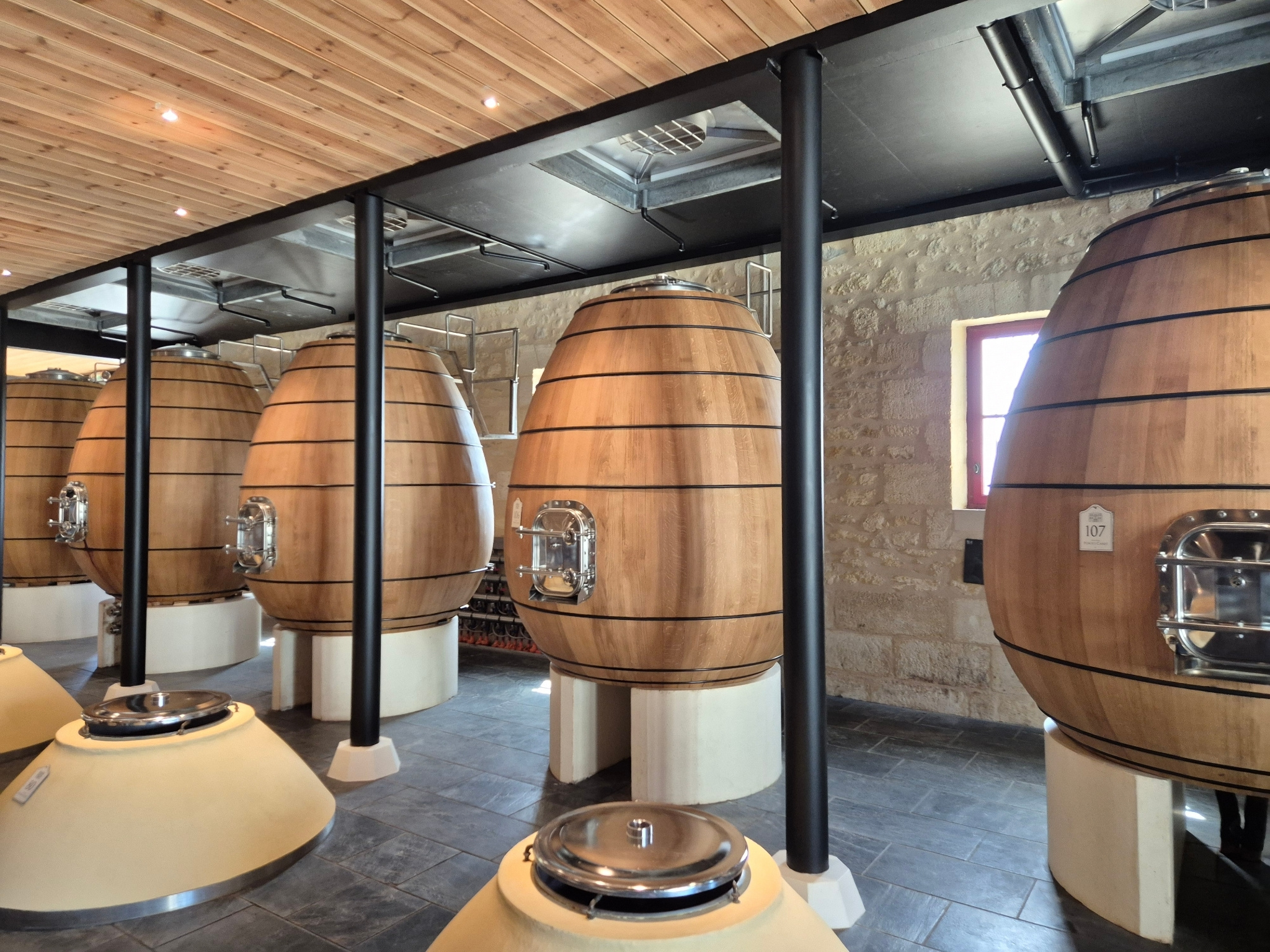
The remarkable cellars at Pontet-Canet
Not many producers could compare 2025 to a single year, although Edouard Vauthier at Ausone did tell me it reminded him most of their super 2020 release… Most though, likened the year to a meeting point between the rich depth of the 2022 wines and the freshness of the 2016s – but in truth, it feels like something quite distinct. Jean-Philippe Delmas of Château Haut-Brion described the vintage’s dual nature – its brightness and intensity, power and lift – as almost “schizophrenic”. I understand what he means even if this is perhaps a slightly clumsy descriptor.
Importantly, this is not a vintage confined to a handful of top estates. Both Left and Right Banks have performed strongly. Cabernet Sauvignon proved resilient in the heat, particularly old vines on the Left Bank’s grander terroirs, while Merlot excelled on clay on both banks and did extraordinary things on the limestone of the Right Bank. Quality extends well beyond the top echelon though, with impressive wines at all levels of fame and price. A visit to Pierre Taix at Château La Mauriane, one of our perennial favourites, was a particular highlight – the best wines I have tasted there to date – and a reminder of the opportunities that exist beyond the headline names.
To conclude
In short, 2025 is a vintage that reminds me exactly why Bordeaux continues to captivate. Confounding at times, certainly – but ultimately capable of producing wines of real beauty and balance. These are wines defined by precision, freshness and drinkability, underpinned by enough structure to age gracefully. They will give pleasure both in youth and over the long term, making formats such as halves and magnums particularly appealing this year.
So, as we await release prices, there is genuine cause for optimism. There are excellent wines at every level, and if pricing remains sensible (somewhere close to 2024 please) there will be real value to be found. Wines that will reward buyers with years of enjoyment.
We can only hope that the sunshine and charm so evident in the glass don’t go to the heads of those setting the prices. I remain, cautiously, hopeful.