Côte de Beaune
Whilst not hit quite as hard as the Cotes de Nuits, yields across the Cotes de Beaune’s reds were still down by 50-60%. Despite this better result this is the page you will find most reduced for our selection this year. Nicolas Rossignol opted not to release any of his tiny harvest in 2024.
Domaine De Courcel, who previous employed Yves Confuron to make their wine, have decided to take the responsibility back, so there will not be any 2024s and the style will fundamentally change going forward. On the positive front, Adrien Pillot, now fully at the helm of the family Domaine, continues to refine their reds and the perennially successful Paul Zinetti of Domaine Comtes Armand has produced a Pommard Epenots to rival his finest.
The 2024s lean well into the natural, supple charm of Cotes de Beaune reds, producing perfumed wines of great clarity. Even the grandest will be enjoyable with five years on the cellar.
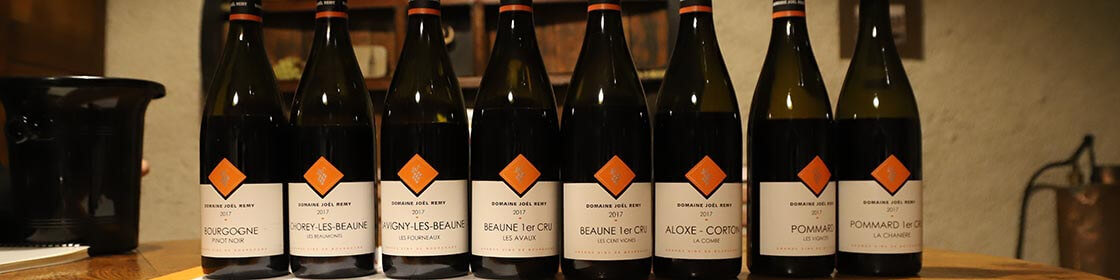
Domaine Remy & Fils
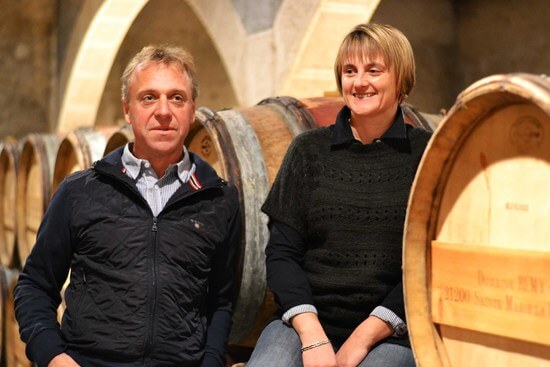
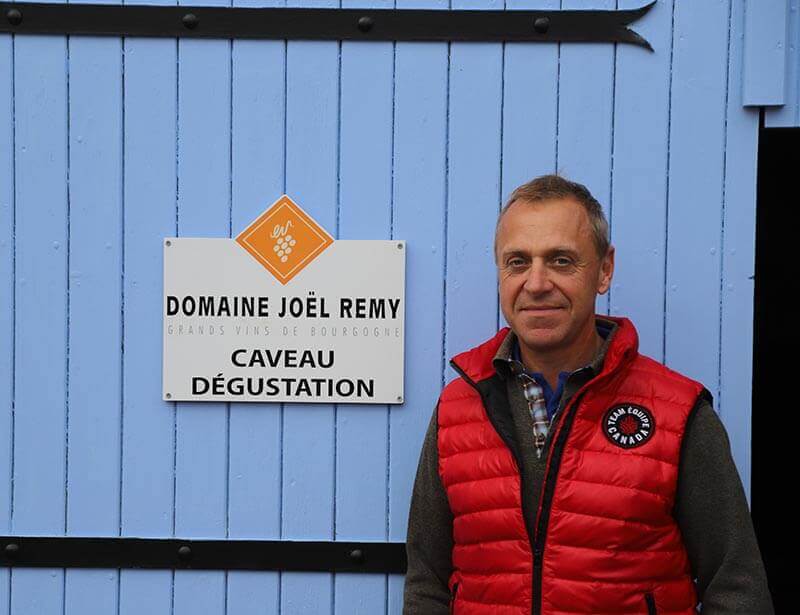
A family domaine that extends back five generations to 1853, but which Joël has modernised considerably over the past twenty years, installing new fermentation and ageing equipment. Over the years his vinifications have changed, and the wines have a lot more immediacy and precision. The quality of fruit is not in doubt, as lovers of his Bourgogne Rouge from year to year will attest, and a lot of work in the vineyard contributes to this, including leaf-thinning towards the end of the growing season. In the winery he has installed a vibrating sorting table, and the only filtering is by a lens filter at very low pressure to avoid de-naturing the wines. All offer quite striking value.
In 2016 Joël was joined full-time by both his children, Maxime and Manon. There is a renewed air of excitement and ambition here. They are moving to slightly longer élevages over eighteen months, with four to five months in cuve at the end. The reds get 25% new wood, but after racking (after about a year) they are put into old barrels.
Joel hunts finesse and has been working on tannin structure for years. Picking at right time, using his vertical press - 'artisanal perhaps' says Joël but you can control it so closely - very gentle extraction is possible. Less pigeage too. It's clear these efforts are all paying off!
2024 BEAUNE 1er Cru Cent Vignes Domaine Remy & Fils
This has an easy feel on the palate, relaxed and ripe, and all in balance, the fruit just a little closed up for now - minerals lean in, extending the finish.This has an easy feel on the palate, relaxed and ripe, and all in balance, the fruit just a little closed up for now - minerals lean in, extending the finish. Drinking range: 2028 - 2036L&S (Oct 2025)
In Bond
2024 CHOREY LES BEAUNE Les Beaumonts Domaine Remy & Fils
Very much in it's usual style of sappy, fine-tannined and red-fruited gentle amplitude. Not quite yet got to full expression, but another six months before bottling to come, so this will be ready toVery much in it's usual style of sappy, fine-tannined and red-fruited gentle amplitude. Not quite yet got to full expression, but another six months before bottling to come, so this will be ready to enjoy from when it arrives. Drinking range: 2027 - 2032L&S (Oct 2025)
In Bond
2024 SAVIGNY LES BEAUNE Fourneaux Domaine Remy & Fils
Red earth full of iron. More closed, but this is well-done again, there's a bit more depth than the Chorey, and it has a darker expression.Red earth full of iron. More closed, but this is well-done again, there's a bit more depth than the Chorey, and it has a darker expression. Drinking range: 2027 - 2035L&S (Oct 2025)
In Bond
2024 BOURGOGNE ROUGE Pinot Noir Domaine Remy & Fils
Fine and floral style, without the rich volume of 2023 and 2022, perhaps, but this is good in it's own terms, and slightly lighter and more elegant silkiness.Fine and floral style, without the rich volume of 2023 and 2022, perhaps, but this is good in it's own terms, and slightly lighter and more elegant silkiness. Drinking range: 2026 - 2030L&S (Oct 2025)
In Bond
2024 BEAUNE 1er Cru Les Chardonnereux Domaine Remy & Fils
Cask sample. Lightish crimson. Pretty raspberry aroma with a touch of spice, subtle. A little more depth than in the Savigny, with a longer finish. Tannins slightly firm and suggestion of stems onCask sample. Lightish crimson. Pretty raspberry aroma with a touch of spice, subtle. A little more depth than in the Savigny, with a longer finish. Tannins slightly firm and suggestion of stems on the finish – dry and fine. Drinking range: 2028 - 2034 Rating: 16.5 Julia Harding MW, www.JancisRobinson.com (Jan 2026)
In Bond
2024 ALOXE CORTON Les Combes Domaine Remy & Fils
Distinctive nose, touch of strawberry. More clay here, volume, fine tannins and and more open. Nice and long.Distinctive nose, touch of strawberry. More clay here, volume, fine tannins and and more open. Nice and long. Drinking range: 2028 - 2037L&S (Oct 2025)
In Bond
2024 POMMARD Vignots Domaine Remy & Fils
As one would expect, high on the hill and on the limestone, this has a firm-toned colour and a bright expression over a taut structure. The fruit is closed, but purple, vivid with freshness.As one would expect, high on the hill and on the limestone, this has a firm-toned colour and a bright expression over a taut structure. The fruit is closed, but purple, vivid with freshness. Drinking range: 2029 - 2038L&S (Oct 2025)
In Bond
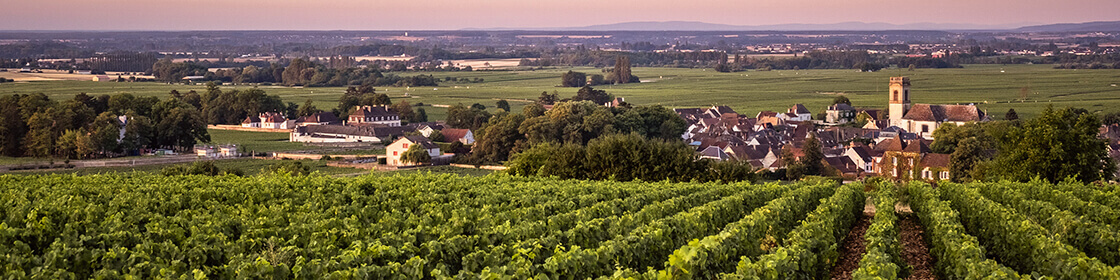
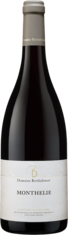
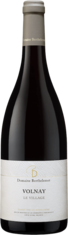
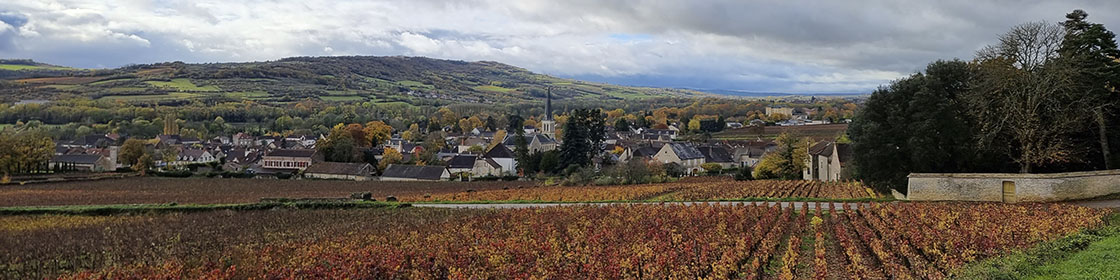
Domaine Berthelemot
Domaine Berthelemot is the creation of Brigitte Berthelemot, who is, by all accounts, something of a tour de force. Brigitte has, in a very short space of time (starting in 2006), knocked together a domaine of 15 hectares, spread over 45 parcels.
The basis of this spread was Domaine Garaudet in Pommard, but then they also took over Domaine Allexant. Charles Allexant was a bouilleur de cru (distiller of marc) who went round the villages plying his trade and who knew the Côte well, and also the vignerons for whom he distilled. In 1957 he bought a first vineyard in Volnay, and others followed, so that he built up a patchwork from Gevrey to the Côte Chalonnaise.
The final piece of the jigsaw was the purchase of Domaine Marey in Pernand.
The vinification is overseen by Brigitte's son Thomas, after he worked alongside cellarmaster Marc Cugney (who has now retired) for a number of years. The reds are picked into small cases in which they are transported to the winery - and vinified in stainless steel after a 4 day cold maceration. Extraction is gentle and mostly by remontage. The wines then go into barrel with a maximum of 20% new wood. The whites are pressed, and after a short débourbage, are put in tank, where they begin their fermentation. Once the fermentation is under way, they are moved to barrel, with a maximum of 25% new wood.
The domaine is certified organic since the 2021 vintage
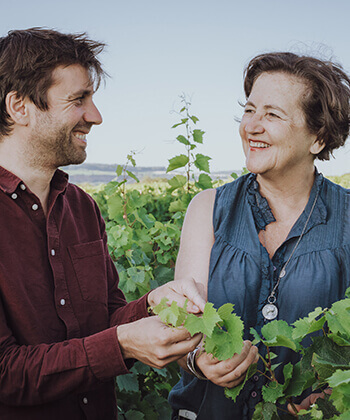
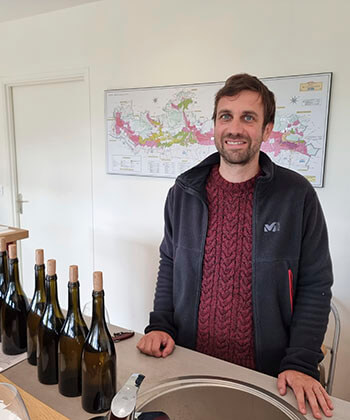
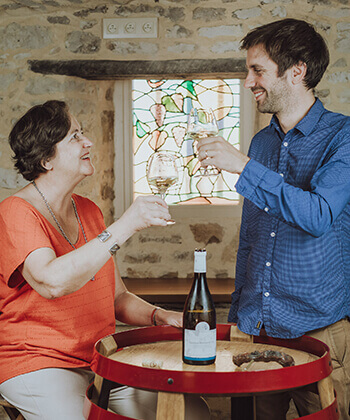
Domaine de la Choupette
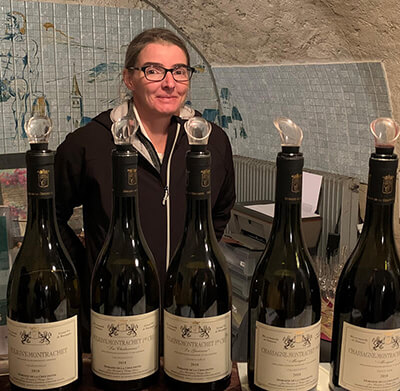
The Gutrin brothers' domaine was created when the twins joined forces in 1992 - it's based in the middle of Santenay, with Jean-Christophe in charge of the vines and Philippe in the winery. Perrine Gutrin runs the 'front of house'. They have vineyards in Puligny (three hectares), Chassagne (half a hectare) Maranges (one hectare) and Santenay (seven and a half hectares) - eight hectares of red and four of white in all. The vineyards are worked traditionally with ploughing rather than chemicals for weed control and to encourage the roots to go deeper. Yields are initially controlled at the pruning and with de-budding, and finally a green harvest as necessary. The domaine is certified HVE 3 ('High Environmental Value') from the 2022 harvest.
Whites are classically made with élevage in barrel for a year with up to half new wood. They are playing with the specification of the barrels, looking for a 'discreet toast'.
The reds are de-stemmed and macerated cold for a week before the three week fermentation at around 28C, then the temperature is allowed to rise to around 33C to stabilise colour and tannins. This gentle vinification is aimed at making fruit-forward wines, which are then aged in barrel for twelve to eighteen months using a mix of new and up to three-year-old barrels.
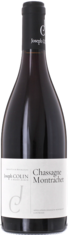
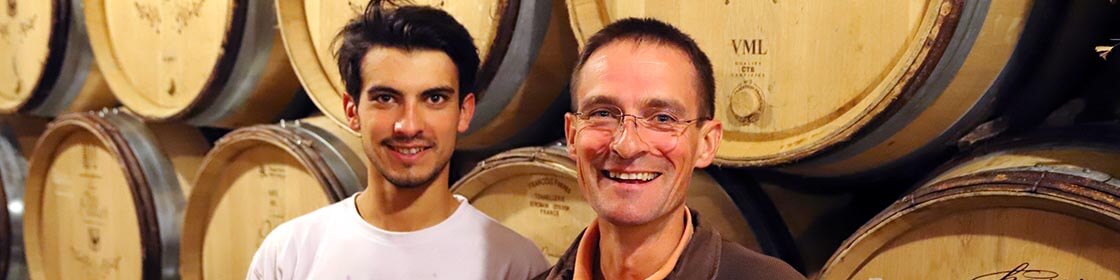
Domaine Joseph Colin
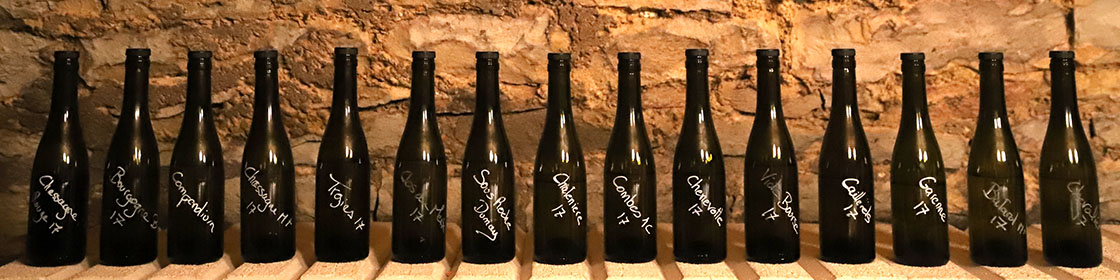
Joseph Colin is one of the four children of Marc Colin (the others being Pierre-Yves, Damien and Caroline), who had a large domaine with vines in Saint Aubin, Santenay, Chassagne and Puligny. Pierre-Yves left the family domaine in 2005 and after that Joseph was an important member of the team there. After making a token 1800 or so bottles on his own account in 2016, he started in earnest with 2017, with seven hectares of vines, from which he makes an astonishing nineteen different cuvées.
Most of the vines he has in Saint Aubin are young, but by limiting bunches to six or seven per vine, he manages to control the yields. With plenty of time to learn his craft at Domaine Marc Colin, he has developed into a confident winemaker. He experimented with sulphur levels in the wines at the family domaine, so coming to his current view that the wines should be left the longest time possible without added S02, perhaps adding some at racking, but if he feels there's still enough C02 after racking, he will not even add any at that stage, so as to develop 'wine at its purest', but he is keen to say also that he has no standard recipe - he will adapt to each wine. In 2020 he again used no S02 until just before bottling, but he's clear that if there's some botrytis, for example, he will add it earlier. Generally nothing is either fined or filtered. He is very aware of biodynamics, but says that the tides are more important than just the phase of the moon, and that he places less importance on whether it's a fruit or flower day - for him the important thing is not to manipulate a wine when it's tasting good - you must do it when it's not showing well.
Joseph is already a a quite established reference point for Saint Aubin for lovers of precise, pure white Burgundies with fresh acidity and crystalline definition. In terms of volumes - Joseph is a rare success in 2024, with losses in Saint Aubin far less dramatic than in other villages and the wines have a wonderful texture this year.
Domaine Fernand & Laurent Pillot
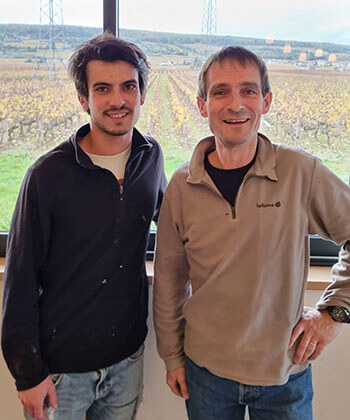
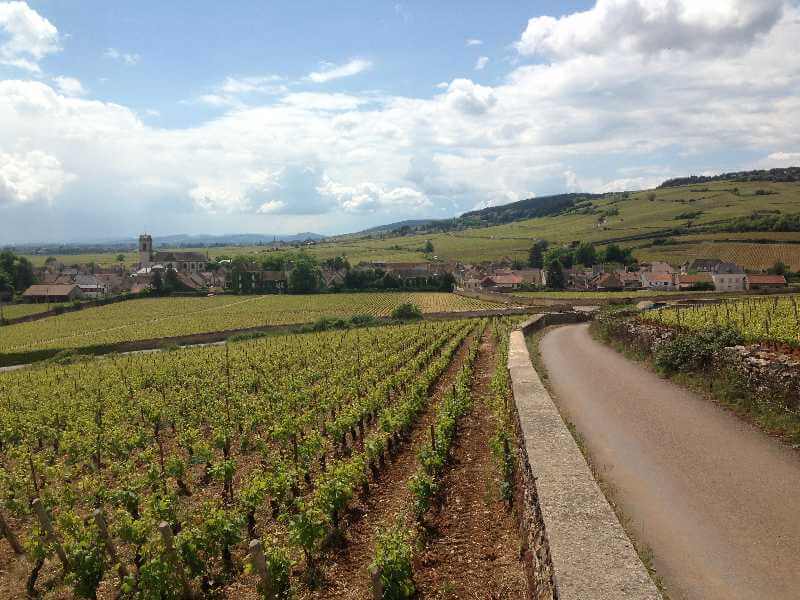
The origins of the Pillot family in Chassagne can be traced back to the eighteenth century, when they seem to have been coopers more than vignerons. In the nineteenth century they abandoned barrel-making in favour of enlarging the property in Chassagne. Fernand and Laurent, who is the fourth generation, added to it again in 1992, and then in 2001 Laurent's wife Marie-Anne inherited half of her family's property, the Pommard domaine of Pothier-Rieusset, and Laurent and his father bought the other half. The domaine now stands at 14.5 hectares of vines across almost the whole length of the Côte de Beaune from Santenay to Beaune.
The Domaine is worked according to organic principles and is ploughed – no chemical weedkillers are used. They have also been members of the Dephy-ECO-phyto group, which works to reduce the number of treatments using copper sulphate, since 2012. In 2021 they began the process of organic certification. d 2024 is the first year of being certified.
Laurent has always managed to pack in a lot alongside his running of the vineyard. He has his own plane which he flies to all corners of France, he hunts with hawks, and conducts the Chassagne brass band as well as dabbling in Mayoral duties - on top of being a father of three, Anaïs, Adrien and Eugène. They are all mad about the alps and disappear up the mountains at regular intervals.
Laurent's eldest son Adrien travelled the world in his early twenties making wine all over the place, having completed his training in Beaune. Bringing back lessons learnt in Australia, South Africa and California (and from a stint at Lea & Sandeman). During harvest Adrien is now the one in the winery while Laurent takes charge of the picking team. Adrien has already made some changes to the vinifications and the quality here is taking another step up.
The wines have long been L&S favourites in both red and white - they represent excellent value, and they age very well too, despite being attractive young. The whites are precise and pure, and not lacking for body and generosity, while the reds are velvety and juicy, beautifully balanced even if drunk young on their expressive Pinot fruit. The domaine was rightfully heralded in Decanter Magazine as 'an address that deserves to be better-known'. Great value and real pleasure across their range.We discussed Adrien's wish to do a longer élevage for the whites, but the problem that if you take the wines out of barrel that means keeping them in vats with floating tops, and they are not mad about the practicality of that. For now most are bottled after a year, but the Vide Bourse and Grandes Ruchottes will stay in barrel until the spring. They use little SO2 to begin with, gradually stabilising the levels once the wines are back in tank, and still finishing with low levels. They like ripe grapes: 'there's a kind of fashion to be the first to pick in Burgundy - they want to keep the freshness but all they get is acidity and tannin'. For the reds, they don't do massive extraction - 3 pigeages only in the middle of the fermentation, but they do a lot of pump-overs.
Domaine Henri Germain
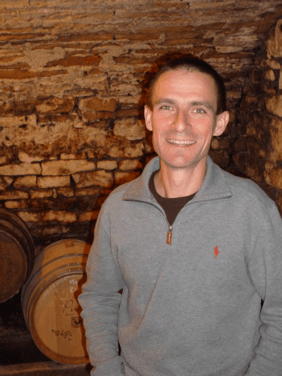
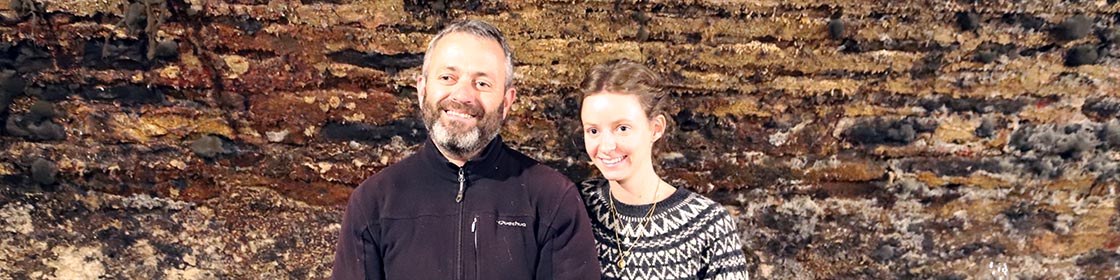
Jean-François Germain was joined in 2018 by his daughter Lucie - who is now helping to run this small (7ha) domaine.
The Chassagne vineyards came through his mother, a Pillot, and Jean-François is married to François Jobard's daughter (sister of Antoine), so they are quite intertwined with some of our other producers. The Poruzots comes from the rows next to Remi Jobard's. In terms of winemaking the Germains are always happy to let nature take its course, and in the vineyards they follow as natural a system of viticulture as possible (organic, not certified).
These are concentrated, tightly wound wines from one of Burgundy's coldest cellars. Alcoholic fermentations can take months and the malolactics are often late, so they have always gone for long élevage in old barrels, always for two winters, and the Premiers Crus usually for 22 months. Slow to develop, they show wonderful crystalline purity. New wood is used very sparingly, just to replace barrels sold when they get to ten years old.
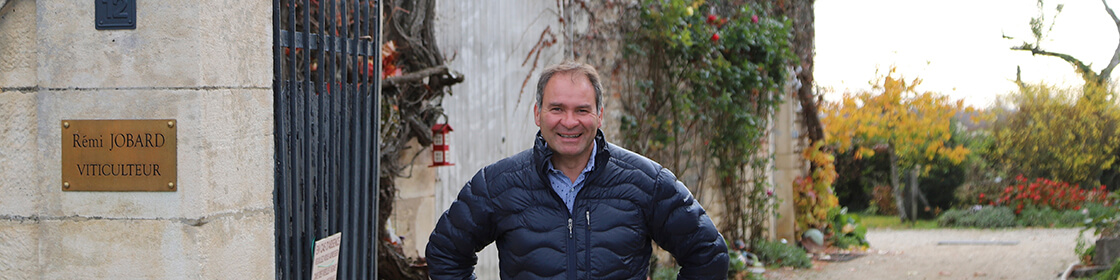
Domaine Rémi Jobard
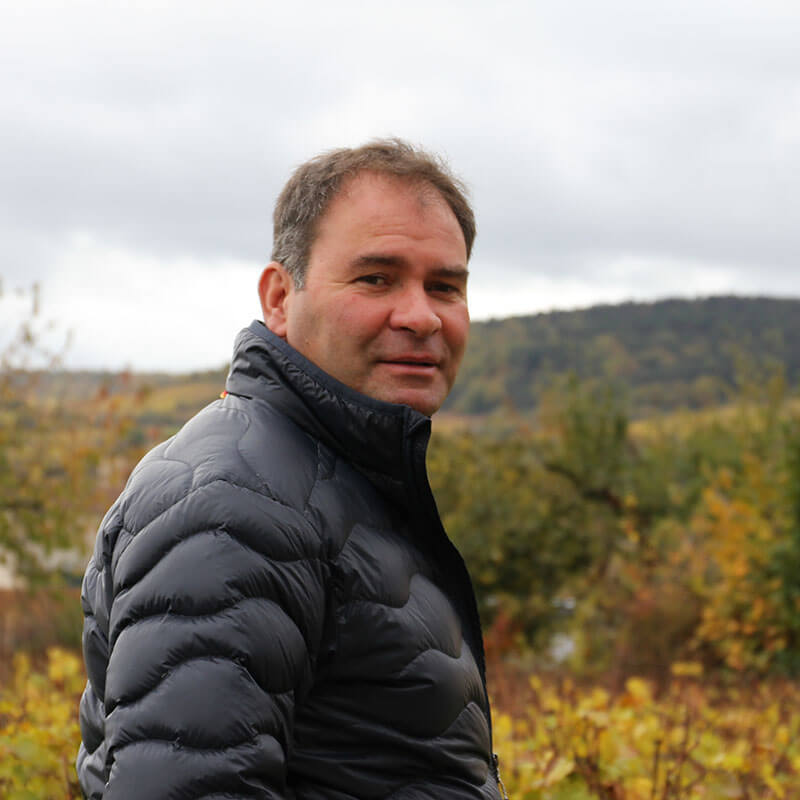
Rémi has been making small qualitative changes ever since he took over here. The entire vineyard is cordon-pruned, so yields are naturally limited. There has been no use of fertiliser since 1994, and the vineyard is grassed-over to encourage the vine roots to go deep. The domaine has been certified organic from 2008. He says that the two most important things are the absence of weedkiller (and thus the necessity to plough, which cuts any surface roots and makes the vine go deeper) and not adding any fertiliser which again makes the roots go deeper to find nutrients.Rémi has two vast presses, to enable him to press very slowly over six hours, and this has resulted in a big jump in finesse. The élevage now lasts nearly fifteen months, so as to allow the wines to develop slowly and to avoid fining. As a result these are wines which take a moment to show, but which reward the patient with complexity and great depth of flavour.
Rémi made a move from traditional barrels to foudres made of a mix of French, Austrian and Slavonian oak, constructed by Austrian cooper Stockinger, and having added a new one (or two) each year, there's barely a normal barrel left. He likes the way the wines develop in these large volumes, in which the 'oaking' effect is minimised.
In 2024, Remi sadly lost about half of his harvest, but what remains reflects everything positive about the whites in this vintage. Texture, structure and depth all come together to form immensely age worthy wine, which in spite of this, is already giving great pleasure.
In 2024, Remi sadly lost about half of his harvest, but what remains reflects everything positive about the whites in this vintage. Texture, structure and depth all come together to form immensly ageworthy wine, which in spite of this, is already giving great pleasure.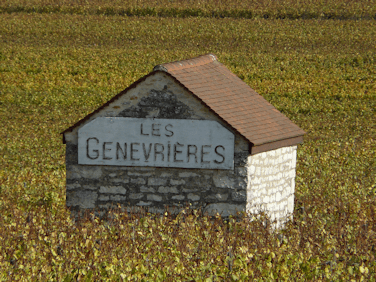
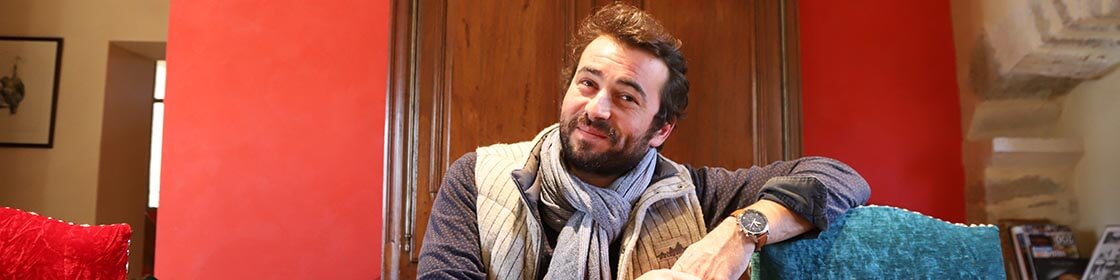
Domaine Comte Armand
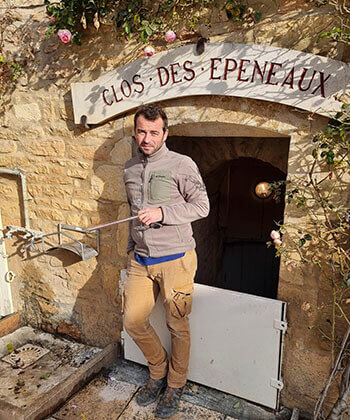
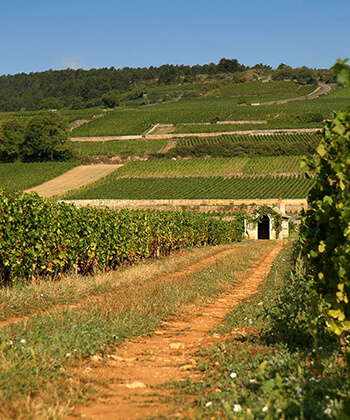
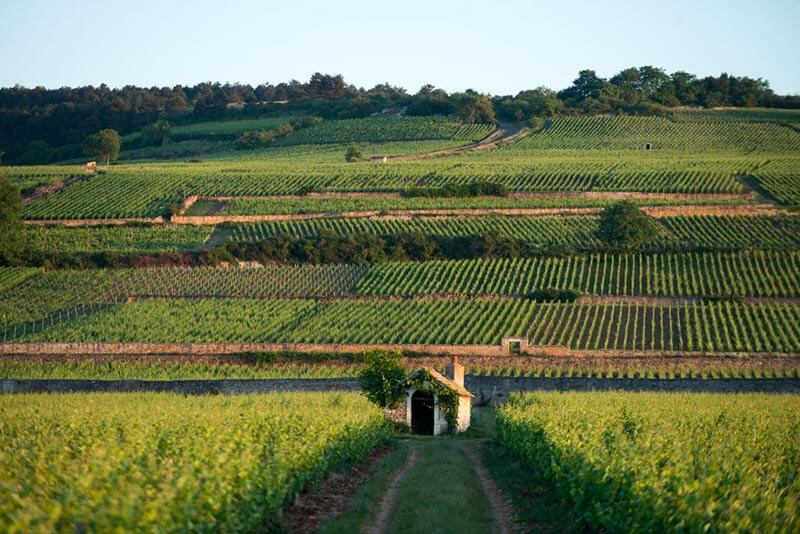
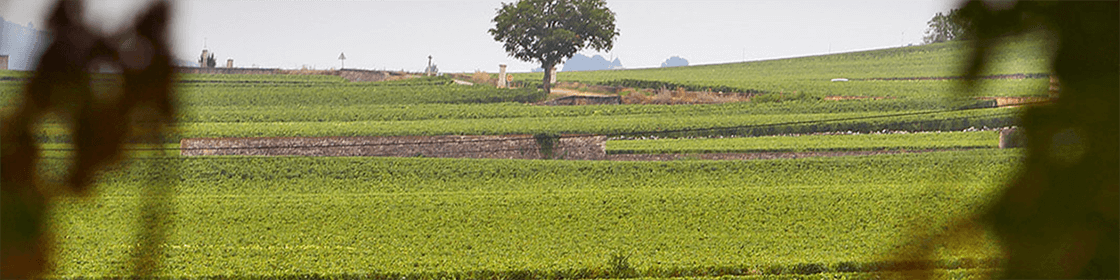
A domaine totalling nine hectares, of which the most important part is a magnificent five hectare monopole of the Pommard Premier Cru Clos des Epeneaux, which was put together by Nicolas Marey in the eighteenth and nineteenth centuries (along with the DRC Romanée Saint Vivant 'Marey-Monge'). These vineyards were all sold, except for the Clos (it now been enclosed by a wall), which came to Jean-François Armand as a dowry when he married Nicolas' daughter in 1826. The Volnay vineyards were added in 1994, followed by parcels in Auxey Duresses.
The current Comte Armand is a lawyer living in Paris, but very supportive of the régisseurs who have looked after this domaine for the thirty years or so that L&S have been buying here. The 1980 vintage, made by one of the many Rossignols of Volnay who was in charge at the time, was for us a great introduction to the possibilities of the great Clos des Epeneaux vineyard. Then came the era of Pascal Marchand, a young Quebecois who came to do a harvest with Domaine Bruno Clair and just never left. He began a period of radical restructuring and the introduction of organic and then biodynamic farming, while making very dark, dense and long-lived wines. Benjamin Leroux, hugely respected amongst growers who approach things from an organic or biodynamic point of view, then took over, and refined this approach and changed the way the parcels of vines are divided up for harvesting, paying less attention to just the age of the vines, and more to the underlying soil types. Claude Bourguignon was employed to provide a full geological survey of the Clos as the basis for this. Under Benjamin the wines of the Clos gained in finesse and precision, while still having the depth and richness expected of a great Pommard.
Both Pascal and Benjamin were keen to expand beyond the confines of the Clos, and the Domaine also has vines in Volnay, and, a particular enthusiasm of both Pascal and Benjamin, in Auxey Duresses, where they are convinced of the great potential of some of this village's undervalued and neglected terroirs. Paul Zinetti, who had worked with Ben for four years, took over in 2014.
The vineyard is cultivated organically (ECOCERT certified) and biodynamically. The grapes are entirely de-stemmed, but left intact, for a five to eight-day cold maceration before the fermentation, which lasts five to ten days, and then the wine remains in the fermenters for between three and fifteen days, depending on the vintage. In most years, the total time with skin contact will be around four weeks, which is longer than most. The wines will then be aged in barrel for between eighteen and twenty-four months, with new wood limited to 30% for the wine from the old vines of the Clos, down to none at all for the village wines.
Paul said from the outset that he wanted to make a less tannic wine in the Clos, and one which is more about aromatic length. In this he is continuing the route that Ben was following, but perhaps taking it even further.
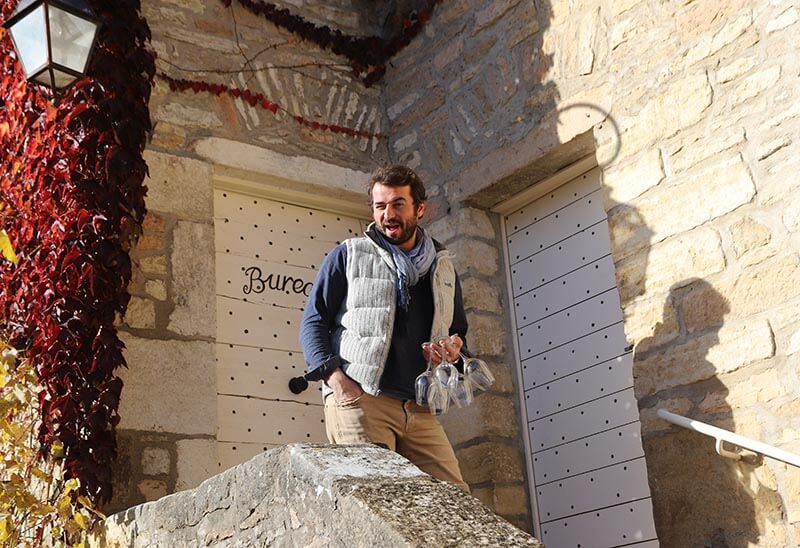
Of 2024, Paul said that like 2021, 2024 could have been a disaster and probably would have been twenty years ago, but even while staying fully organic they were able to save a small amount and bring it to good ripeness. The tiny size of the harvest allowed them to pick over every berry to remove any dried or mildewed fruit - to that extent it was easier to cope with than the abundant 2023 crop. The actual yields achieved varied widely, being much better in the steeper, freer-draining plots.
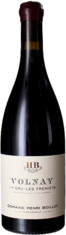
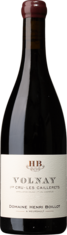
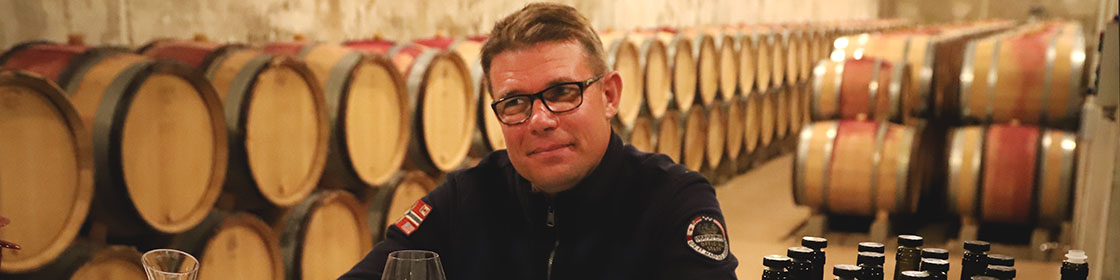
Domaine Henri Boillot
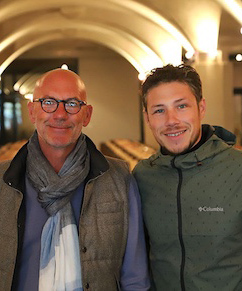
A domaine which dates back to 1885, but which began properly in the early years of the 20th century under the current Henri's grandfather (also Henri). His son, Jean, was the one who really developed it. Henri arrived in 1975 and worked his way up, becoming the winemaker. In 2000 he began the building of the new winery at the bottom of Meursault, and he then bought out his brother and sister to keep the domaine as one, renaming it from 'Domaine Jean Boillot' to 'Domaine Henri Boillot' to avoid confusion with his brother Jean-Marc's domaine.
Henri’s son Guillaume who was responsible for the vinification of the reds from 2012 to 2022. Henri continues to make the whites which he likes to be 'straight, taut, precise, pure and elegant'. Guillaume's input resulted in red wines that gained in definition and energy, without losing the luxurious velvety richness and fruit depth that they always had. From 2018 Guillaume expanded his use of vinification intégrale in which the reds are vinified in the barrels they will be aged in - the cellar being equipped with 140 barrels with stainless steel doors in the ends, all made of wood they bought for the purpose, which has been dried for three years. Labour-intensive and time-consuming though it is, Henri and his new oenologist Mireille Malis clearly thought it worth continuing, as now that Guillaume has left to become a négociant in his own right, the domaine has persisted with this method in 2024. Mireille, who was working at Fréderic Magnien, had previous experience with the domaine of the Lycée Agricole in Beaune as well as at Domaine Roederer in California and other stages in Bordeaux (Cheval Blanc) and Burgundy (Bouchard Père et Fils), will no doubt add her own thumbprint - 2024 saw the first use of an optical sorting machine and they are very happy with the results.
The Domaine has roughly equal surfaces of red and white, and of which just under 4ha is the Monopole vineyard of Clos de la Mouchère, a walled enclave within the premier Cru Puligny Perrières. After the 2018 acquisition of small parcels in Latricières and Échezeaux, the Boillots bought the vineyards of Domaine Henri Darnat early in 2019, bringing in a new monopole Clos in Meursault, the Clos Richemont, part of 1er Cru les Cras.
This vintage suited Henri's style exceptionally well. As someone who is always able to put plenty of density into his whites, it was the perfect foil to the more tightly structured 2024s.
Domaine Lignier-Michelot
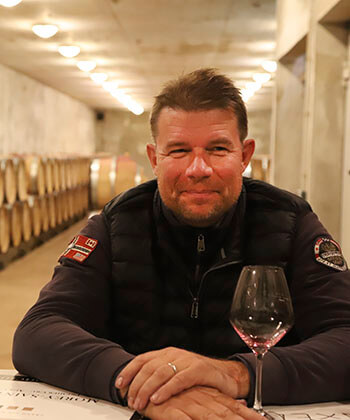
A domaine now of 13.5 hectares, some owned, some in fermage with a little bought in. An average of 290 barrels a year. 25% regionals, 50% Villages, 20% Premiers crus and 5% Grands Crus. Virgile Lignier worked at the domaine with his father Maurice from 1988, beginning to bottle some of the wine from 1992 (it had previously been sold to the négoce), taking over in 2000, which was the vintage when he first bottled all the domaine's production.
In the vineyard Virgile made significant changes, stopping the use of herbicides, and beginning to plough instead. Green harvesting to limits yields followed, along with greater attention to grape selection. The domaine works organically except in extremis, so it's lutte raisonnée.
The wines are made with the least intervention possible, with lots of whole bunches. little extraction (one or two pigeages but mostly he's into remontages, then aged in barrel with 15-20% new wood. They have a lovely combination of enough body and richness, combined with a lively clarity of expression. The old vines village cuvées are seriously good, and great value too. Going up the scale each site seems to speak very clearly of its source and there is a brightness and energy along with full, seamless fruit.
We can say with no hyperbole that Lignier-Michelot made some of the best wine of 2024. His ability to deploy whole bunches, a tricky exercise in this less ripe vintage, was unsurpassed, lending a depth and salinity to the existing taught, red fruit. They are nothing short of mouth watering.
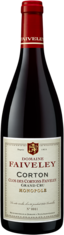
Domaine Faiveley
The Faiveley family are the largest vineyard owners in Burgundy, owning around 120ha, spread across the Côte de Nuits, Beaune and Chalonnaise and encompassing everything from generic Bourgogne up to the grandest of Grand Crus. Their own holdings supply the grapes for 5 out of every 6 bottles made by Faiveley, the balance being bought in from carefully selected contract growers.
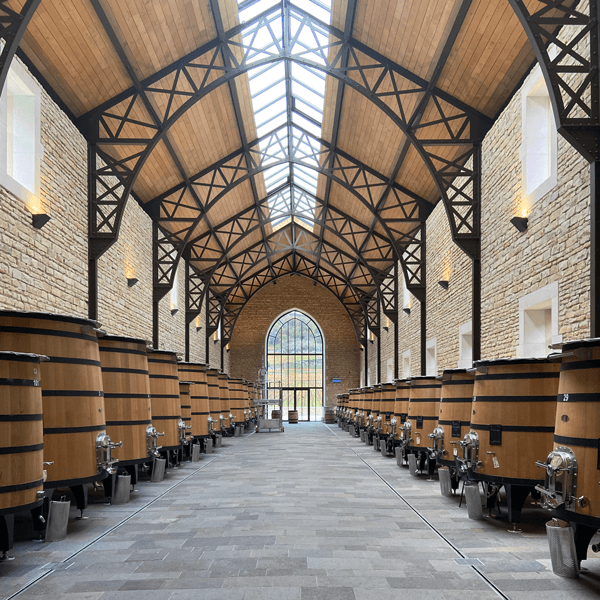
Faiveley has been more and more impressive in recent years, and the combination of winemaker Jérôme Flous and an entirely new winery are taking them onwards and upwards year after year.
Domaine Joseph Drouhin
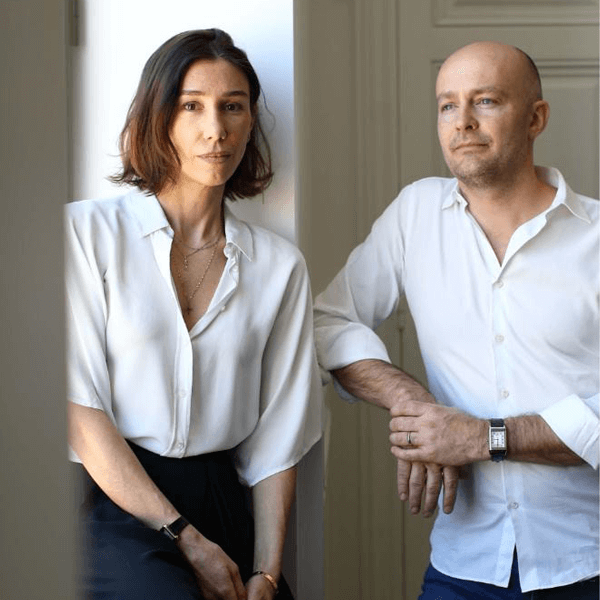
Joseph Drouhin, founded in 1880 and still family owned, are one of the most well-respected names in Burgundy, especially through their flagship wine, the iconic Clos des Mouches.
A huge part of the Drouhin production comes from their own domaine fruit (78 hectares), and much of the rest comes from contracts such as that with the Marquis de Laguiche, who shook hands with the grandfather of the current generation, agreeing to let him manage his vineyards which included an important part of Le Montrachet; this collaboration endures. Today, the fourth generation is at the helm
Small refinements continue to be made here. The presses have been changed - a reversion to basket pressing for the reds, and for whites the presses are open - along with a number of other growers they are following the trend to think that slight oxidation of the juice before fermentation is not a problem and may add complexity as well as avoiding later problems of premature oxidation in bottle.
For the reds there has been the introduction of selective whole-bunch fermentation in the Côte de Nuits wines. The house style remains one that 'emphasises the natural elegance of great Burgundies' as they describe it. The domaine is all cultivated with an organic and biodynamic approach.