The 2024 Port Vintage Declaration is always an event. In the modern era, it has become rarer still. Which is why this week’s release of the 2024 Vintage Ports — the first full general declaration since 2017 — feels genuinely interesting.
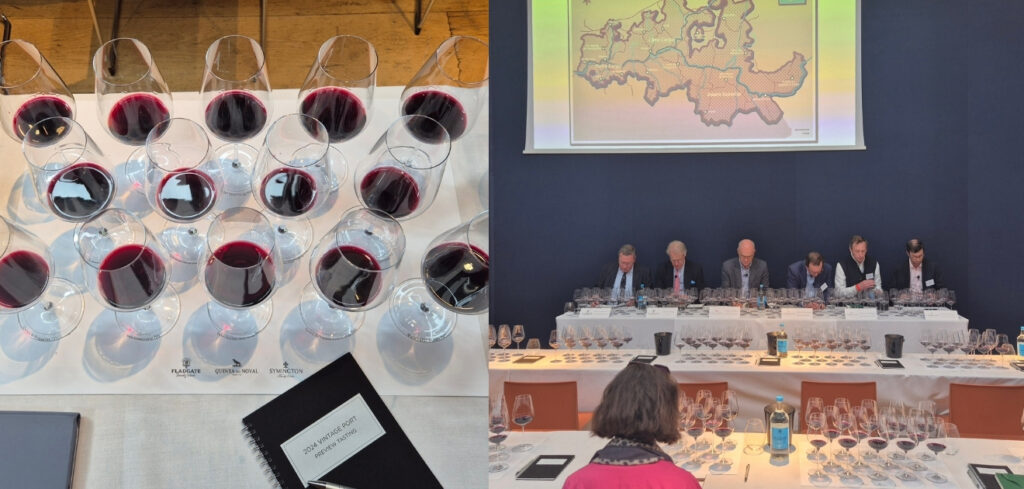
London Tasting Day, Christies, St James. Port’s grandees assemble.
We were fortunate to taste the newly declared 2024s in London this week, and the overriding impression was of wines with harmony, freshness and precision. These are deeply coloured, intensely flavoured Ports, certainly, but they are not the monumental, impenetrable beasts of old. Instead, the 2024s feel wonderfully composed: full yet lithe, concentrated yet vibrant, immediately charming yet unmistakably built for the long haul. In many ways, they perfectly capture the modern direction of great Vintage Port.
For those less familiar with the system, a “general declaration” occurs when the majority of the major Port houses decide conditions are good enough to release a full Vintage Port under their flagship labels. This does not happen every year. In fact, since the outstanding 2017 vintage, most producers have held back, releasing only occasional single-quinta wines in the intervening years. The declaration of 2024 therefore marks the return of what many would consider a truly “classic” Douro vintage release.
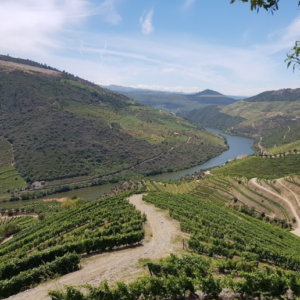
Looking downstream towards Pinhão on the Douro River
“In 2024 we had an alignment of stars that allowed for a general declaration. Port has never been as good as it is now.” Charles Symington
That confidence was echoed throughout the tastings. Several producers referenced 2011 — widely regarded as one of the greatest modern Port vintages — while some even drew comparisons with the legendary 1945 harvest in terms of the growing season’s balance and conditions. Carlos Agrellos at Quinta do Noval went so far as to say that 2024 is “definitely up there with 2011”.
The growing season itself helps explain the excitement. After a very wet winter — what Charles Symington called “money in the bank” for the vines — the Douro entered the growing season with unusually healthy water reserves. Soil saturation reportedly remained at maximum levels through until March, providing an invaluable buffer against summer heat.
Crucially, while July and August were warm, there were no prolonged extremes. Temperatures reached the mid-40s at points during July, but from mid-August onwards conditions cooled significantly, with daytime temperatures rarely exceeding 32°C and September nights dropping to around 15°C. Those cooler nights proved decisive, preserving acidity, aromatics and freshness while allowing for slow, even ripening.
The result is a set of wines defined less by sheer power and more by balance and detail. Touriga Franca, in particular, appears to have thrived in 2024, ripening fully into October and bringing striking floral aromatics and lift to the wines. Several winemakers spoke about the role this variety plays in shaping elegance and perfume — it makes us think of Cabernet Franc in Bordeaux — where its ability to enjoy longer, warmer growing seasons can really add lift and pretty aromatics in warmer years.
Adrian Bridge of Taylor Fladgate summed up the style succinctly when he first announced the release:
“The Taylor Fladgate Vintage 2024 is showing great elegance and poise, firm structure and a powerful complex core of flavours that is very enjoyable now but will change and evolve in the cellar.”
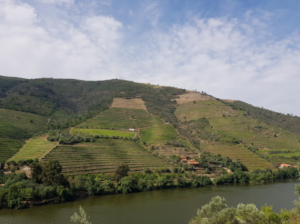
The view across the Douro from the vineyards at Quinta da Romaneira
Interestingly, there was also much discussion around the evolution of Port winemaking itself. All the wines tasted were still produced from estate-owned fruit and fermented in traditional granite lagares, but technology is quietly reshaping how these wines are made. During the pandemic, several houses introduced robotic treading systems to reduce human contact during harvest. What began as necessity has increasingly become part of the toolkit.
Far from replacing tradition, these systems seem to complement it. Many producers now combine daytime foot treading with overnight robotic treading, allowing gentler, more continuous extraction and enabling fruit to move more quickly through the winery while still cool from the vineyard. The resulting tannins in 2024 are notably refined — one reason why these wines feel surprisingly approachable in youth despite their clear ageing potential.
David Guimaraens highlighted this point directly:
“The continued practice of foot treading and co-fermentation have had a significant impact on the house styles remaining unchanged but gaining more intensity… the resulting Vintage Ports show incredible freshness, complexity, and a wonderful sense of balance.”
This perhaps explains why several critics are already predicting relatively early drinking windows for some wines — something that would once have been almost unthinkable for classic Vintage Port. Traditionally, these were wines that demanded decades of patience. The 2024s certainly possess the structure to age for many years, but they also offer an immediacy and polish that makes them unusually attractive young.
Production volumes, however, are extremely small. Taylor Fladgate has described 2024 as its “smallest ever release”, and low yields appear to be a common theme across the Douro. Adrian Bridge was keen to stress that global demand for Vintage Port continues to grow, particularly in markets such as the UK, where the tradition of buying on declaration remains strong among collectors, Oxbridge colleges and livery companies alike.
And perhaps that is part of what makes this declaration feel so important. Beyond the wines themselves — excellent though they are — 2024 feels like a statement of confidence from the Douro. After several challenging growing seasons shaped increasingly by climate change, producers have adapted impressively, both in vineyard management and in the winery. Some are rethinking grape varieties entirely; others are determined to preserve traditional house styles while working around rising temperatures through careful viticulture and gentler extraction.
Charles Symington perhaps captured the mood best:
“The 2024 Vintage Ports whisper rather than shout. After years of heat-driven power, these wines are characterised by their precision: taut structures wrapped in pure, crystalline fruit. This is Douro elegance with backbone, and refinement with staying power. It was worth the wait.”
Having tasted through the wines this week, it is hard to disagree. These are not blockbuster Ports in the old mould. Instead, they are something arguably more compelling: poised, detailed and deeply drinkable wines that combine classical structure with a freshness and clarity that feels distinctly modern.
After seven years without a full declaration, for Port lovers, 2024 looks very much like a vintage worth paying attention to.
Please contact our team with any queries on these super wines, now available to view in more detail – and to order on our Port pages – here.
These are wines with serious ageing potential, and can make fantastic gifts. Especially if you know of any children born or christened in 2024 – something for them to enjoy as adults.’