Côte de Nuits PART 1
Pinot noir is so coveted because it is the great translator. It will tell you the story of terroir more clearly than any other and in 2024, the Cotes de Nuits spoke fully of this unique vintage.
The cooler climate meant red fruits – cranberry, strawberry and raspberry were so frequently found, but also of aromatics, which are high toned and expressive.
It is a vintage which focusses on purity, transparency and terroir expression. Whilst you might not have blockbuster concentration, or decades long cellaring potential, it is made up by a crop of wines which appear… Naked.
It is impossible to talk about the Cotes de Nuits without mentioning yields. You were pushing the limit if you managed to maintain half of your grapes, with many producers losing 80% of their crop. The lowest yields we had reported were just 2 hectolitres per hectare. To finish with the words of Neal Martin – ‘this is an endlessly fascinating vintage that will enamour the small number who imbibe the fruits of much labour’.
Domaine Huguenot
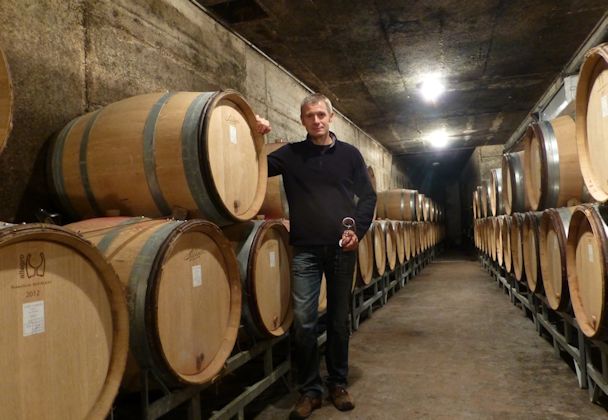
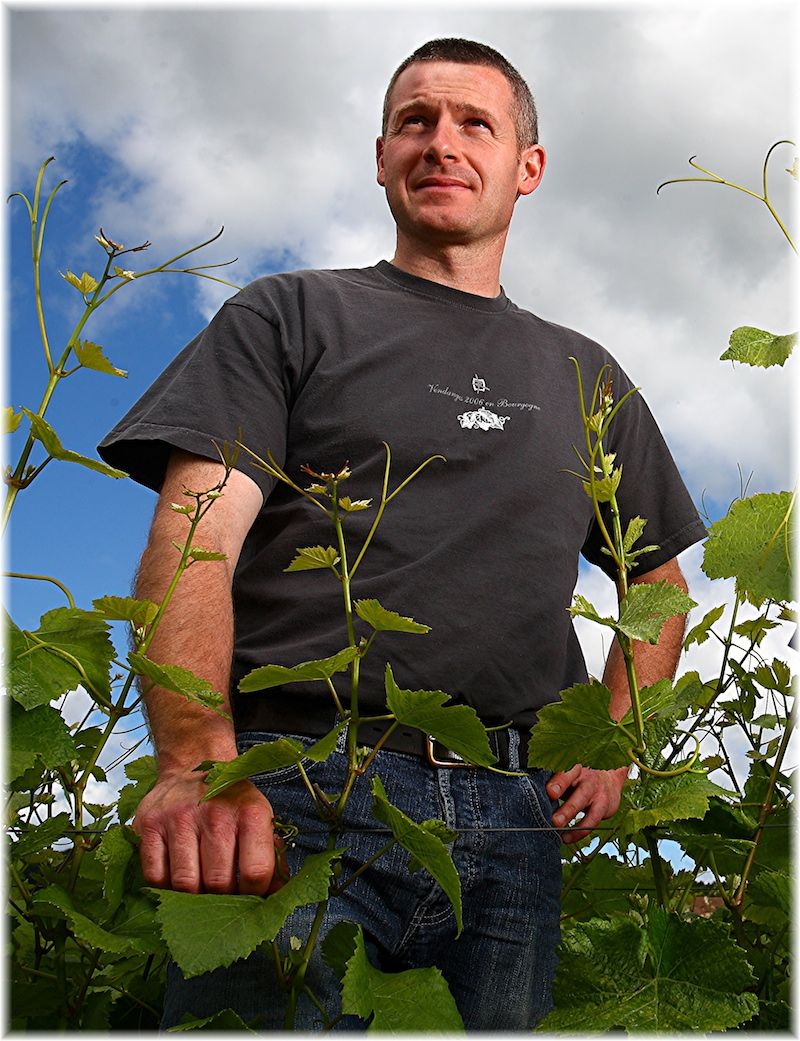
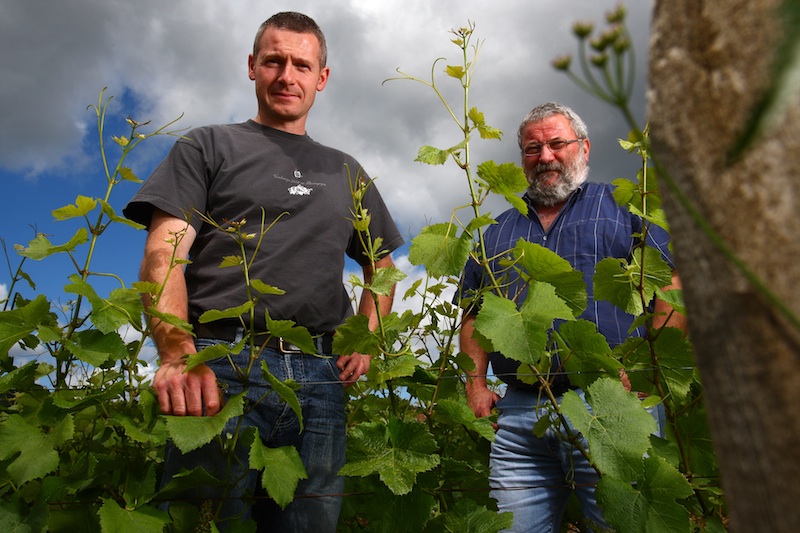
The Huguenots can trace their history in Marsannay and working in the vines back to 1789. Currently the domaine is run by Philippe. His father Jean-Louis expanded the domaine from five to twenty-two hectares (twelve in Marsannay, six in Fixin, and four in Gevrey) before handing over the reins. Philippe took the bold step of taking the whole domaine into organic production (the conversion was completed in 2010), but immensely sadly he was forced to do a single non-organic treatment in 2016, because of the terrible conditions, so he was back to square one - three years to re-qualify for the organic label. Nevertheless Philippe, although initially unsure if he would try for the certification again was not planning to change the way he works - it is, he assures us, better for him and the environment and and his workers as well as for quality. So he fought his way back, and the wines have been certified organic again since 2019. Philippe now has 23 hectares in production.
Philippe is uses up to 25% of whole bunches in the warm vintages, liking the peony scent it brings, but also concerned that it can make the terroir distinction less well-defined. He used very little in 2024, fearing imparting bitterness from the green stalks. He uses around 20-25% new wood on his Premiers Crus and 50% on the Grand Cru.
2024 was the smallest harvest of Philippe's career at a mere 20hl/ha, after a season with more rain than they had in 2022 and 2023 combined. They suffered hail too. 'It's a vintage ending in 4', says Philippe fatalistically, 'but worse - it's the smallest of all.' But the quality, thanks to a year's effort that must have nearly killed them, is there in the glass, which is a triumph, with wines with the typically Burgundian freshness of the 21s, but better - supple and elegant.
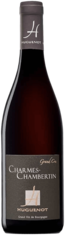
2024 CHARMES CHAMBERTIN Grand Cru Domaine Huguenot
A little plot under the junction of Chambertin and Clos de Bèze, next to Griotte. There's very little earth - it's on the rock. The effect is quite different, it's lifted and bright, with very fineA little plot under the junction of Chambertin and Clos de Bèze, next to Griotte. There's very little earth - it's on the rock. The effect is quite different, it's lifted and bright, with very fine tannins, as Philippe says (possibly slightly under-selling it) 'it's easy to drink and thirst-quenching'. It's a lovely Grand Cru which you'd never be disappointed to encounter. Drinking range: 2033 - 2042L&S (Oct 2025)
In Bond
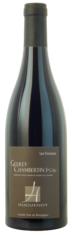
2024 GEVREY CHAMBERTIN 1er Cru Fonteny Domaine Huguenot
Close to Mazis and Ruchottes, Fonteny shares their deep soils and makes deep dark-fruited wines. The black fruit expression here is undoubtedly emphasized by the oak. Rich and palate-coating, there'sClose to Mazis and Ruchottes, Fonteny shares their deep soils and makes deep dark-fruited wines. The black fruit expression here is undoubtedly emphasized by the oak. Rich and palate-coating, there's real power of extract and tannin too, with minerals picking up the finish. Drinking range: 2030 - 2040L&S (Oct 2025)
In Bond
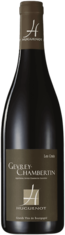
2024 GEVREY CHAMBERTIN Les Crais Domaine Huguenot
An early ripening village site on the alluvial fan below the village (of limestone that washed down the combe from the high ground by glacier meltwater). Attractively open nose, silky mid-weightAn early ripening village site on the alluvial fan below the village (of limestone that washed down the combe from the high ground by glacier meltwater). Attractively open nose, silky mid-weight palate. Juicy. This warm site can give quite high alcohol in ripe years, but the limestone keeps the expression fresh. Drinking range: 2029 - 2038L&S (Oct 2025)
In Bond
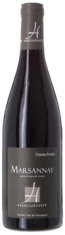
2024 MARSANNAY Charme aux Prêtres Domaine Huguenot
The favourite of the Marsannays again this year, it's beautifully balanced, with both more volume and more precision, still supple tannins and longer and more composed too.The favourite of the Marsannays again this year, it's beautifully balanced, with both more volume and more precision, still supple tannins and longer and more composed too. Drinking range: 2030 - 2038L&S (Oct 2025)
In Bond
2024 MARSANNAY Montagne Domaine Huguenot
Rich and dark as usual, but still in the silky fresh style of the year which gives an attractively lively edge to the black berry fruit expression.Rich and dark as usual, but still in the silky fresh style of the year which gives an attractively lively edge to the black berry fruit expression. Drinking range: 2029 - 2036L&S (Oct 2025)
In Bond
2024 MARSANNAY Champs Perdrix Domaine Huguenot
Supple and elegant again, it is not quite in place yet, but the volume, retasted after the Charmes Chambertin, impresses, as does the density of flavour.Supple and elegant again, it is not quite in place yet, but the volume, retasted after the Charmes Chambertin, impresses, as does the density of flavour. Drinking range: 2032 - 2038L&S (Oct 2025)
In Bond
2024 FIXIN Terre Brune Domaine Huguenot
This works well in this style of vintage, the slightly rumbustious solidity that this deep clay terroir produces is tempered and refined so that it comes across as a nicely controlled power. DarkThis works well in this style of vintage, the slightly rumbustious solidity that this deep clay terroir produces is tempered and refined so that it comes across as a nicely controlled power. Dark fruit and a slightly smoky depth. Drinking range: 2032 - 2038L&S (Oct 2025)
In Bond
2024 MARSANNAY Héritage Domaine Huguenot
Good nose of earthy Pinot, palate is silky and fine, fresh acidity, the whole lively and attractive in a lighter vein.Good nose of earthy Pinot, palate is silky and fine, fresh acidity, the whole lively and attractive in a lighter vein. Drinking range: 2027 - 2033L&S (Oct 2025)
In Bond
Domaine Derey Frères
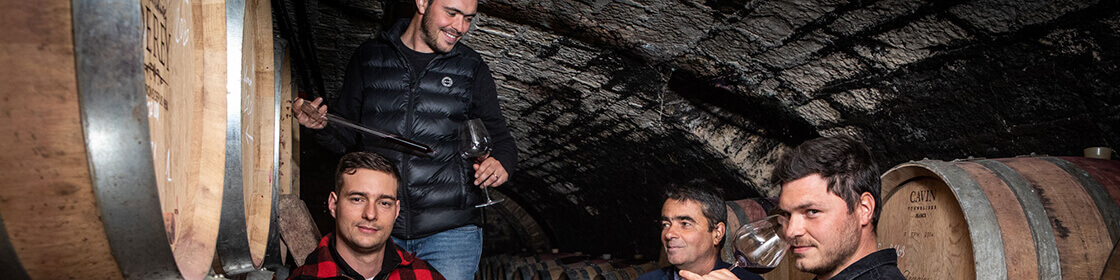
Domaine Derey Frères has its cellar in the village of Couchey, between Marsannay and Fixin. The family's vigneron background can be traced back to 1650, but it was called Derey Frères only from the 1950s, with the establishment of the domaine as it is now when brothers Albert and Maurice worked together. Fifth generation Pierre Derey, while keeping an eye on things, has ceded to the this sixth generation, his sons Maxime, Romain and Pierre-Marie, who seem to work well as a team in vineyard and cellar - so the domaine's name has never been more appropriate.
The brothers have 20 hectares of vines, spread from the edge of Dijon to Gevrey Chambertin. There are Bourgogne Rouges from the historic vineyards of the Dukes of Burgundy which are relics of the historic Dijon vineyards, now mostly part of the town. The core of the domaine could be said to be the ten hectares in Marsannay, while the vineyards in Fixin and Gevrey Chambertin complete the range.
In the vineyard the brothers have turned the whole domaine into organics, certified since 2023. Winemaker Maxime has experimented with some whole bunches, ranging from 20% top 100%, quite quick alcoholic fermentations, with or without the addition of sulphites, and usually with indigenous yeasts, but with no fixed recipe - it all depends on the year. The wines are then aged for between 12 and 18 months with an average of 25% new barrels (up to 40% in the top wines).
The result is wines which they say are in the image of the three brothers - 'instinctive, frank and spontaneous', with immediate pleasure from a juicy fruit which dominates, but which will not prevent the wines from aging well.
in 2024 the brothers, in stark contrast to many growers who seem to have been afraid of the green in the stalks, used masses of whole bunches, even the Bourgogne was at 80%. Their yields were low 'a half-harvest' they reported. All the colours are vivid purple-black, and all the wines seem immensely youthful and vigorous. 'We like Pinots that are powerful but crunchy too', they say.
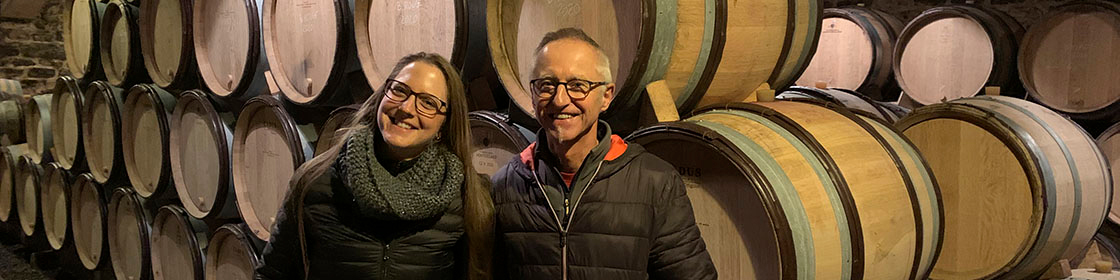
Domaine Thierry Mortet
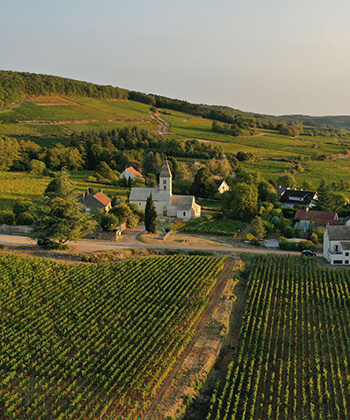
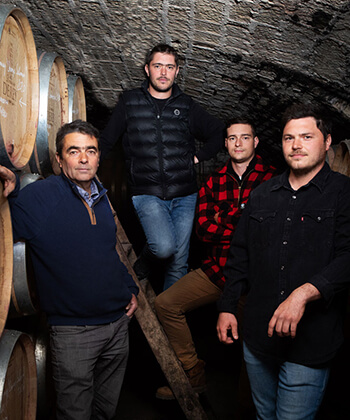
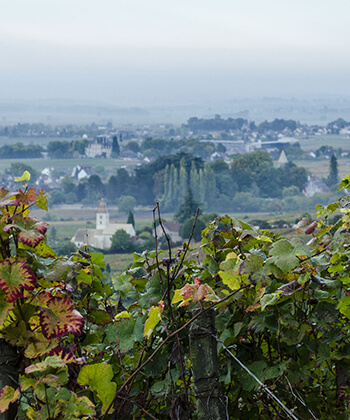
The domaine dates back to 1992, when Domaine Charles Mortet was split between Thierry and his brother Denis, and Thierry set up on his own with just 4 hectares of vines. Today he has 7.3 ha, of which 6 are red and 1.3 white. Only 4.36 hectares are Gevrey or Chambolle, the rest being a small parcel of Marsannay Blanc and regionals - Bourgogne Rouge and Blanc, Aligoté and Passetoutgrain.
Thierry continues to be praised in the French press without ever quite seeming to crack the influential American journalists. It may be simply because he is a bit short of fancy appellations - one little cuvée of Grand Cru would no doubt do his reputation a lot of good - but might also put his prices up, and these remain very modest.In the vineyard, Thierry has been certified organic since 2007, but really this was just an official stamp on what had been the practices of the domaine since the beginning, and he is working towards biodynamic certification. In the cellar, the grapes are entirely de-stemmed, and given four or five days of cold maceration are followed by the fermentation, with just a touch of cooling to keep the temperature around 31-33C (below 35, at least), and two pigeages a day. The total time in vat can be as little as 17 days. The wines then go into barrel, all second use or older for the Bourgogne, with 30% new wood on the Gevrey, and 50% on the Clos Prieur, for a period of around sixteen months.
Thierry's wines are fine and precise, tangy and long, never massive, but not insubstantial all the same. The surprise this year was to find Thierry joined by his daughter Lise who has done her vinicultural training and is now working at the domaine.
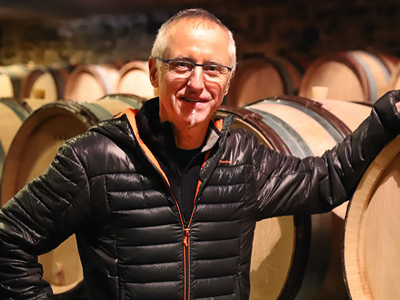
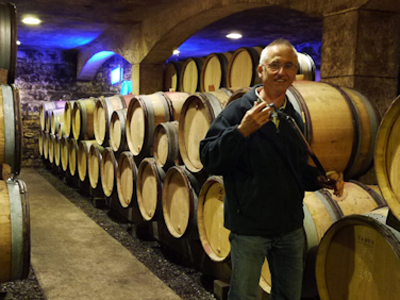
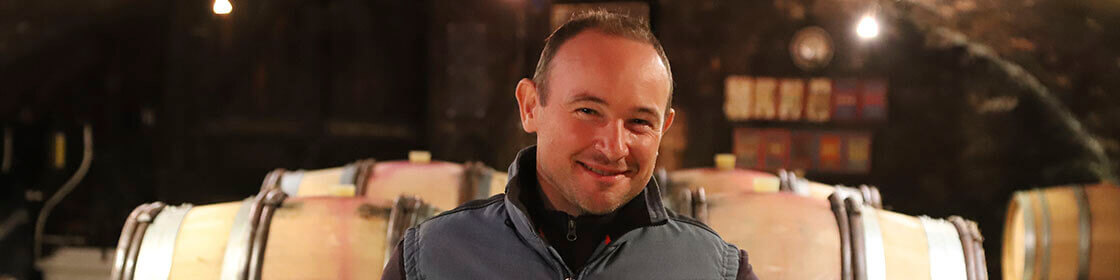
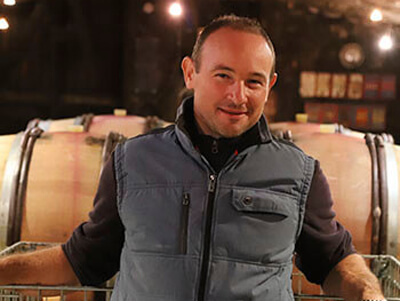
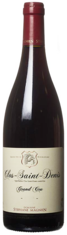
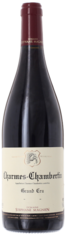
Domaine Stéphane Magnien
Stéphane's is a small domaine, a mere 4.5 hectares, with one full hectare of that in regional wine - Passetoutgrains and Bourgogne - but it is blessed with two Grands Crus and also a long history of not messing with nature. No pesticides have ever been used on this land, and the plants are nearly all the old 'Pinot tordu' - twisted Pinot with its gnarly stems which are less vigorous than the modern clones and said by many to make wines with more finesse.
Stéphane chaptalizes only to extend fermentations - these are wines which his father Jean-Paul used to describe as 'sage en alcool' - from 12 to 13% - the old vines do not make much alcohol. Wood use is also discreet, even though Stéphane has increased the proportion, he does not exceed 50% new wood on the Grands Crus, 25% on the Premiers Crus and on the village appellations, 15% new wood for one year only, then all into older barrels.
Stéphane says that he aims to make wines with more richness than his father's, 'but not black angular wines which have less relief. Wines which leave your mouth clean and clear, refreshed and revived and, above all, wanting another glass'. He destems 100%, gives the grapes a six-day maceration, then a classical fermentation with just two pigeages, and a little remontage (pumping over) at the end.
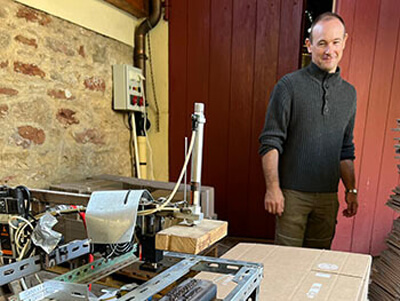
Domaine Chicotot
A 7 hectare domaine in Nuits Saint Georges currently run by Pascale and Clément Chicotot, who describe themselves as 'vignerons...simplement'. They say that only natural methods have been used for several generations and the domaine is certified organic.
Vinification is traditional, the fermentation beginning after 5 to 6 days of cold maceration and lasting around 15 days, with remontage or pigeage as necessary and aged in barrel with a maximum of 25% new wood. SO2 levels are very low. The wines are well-coloured and well-defined and expressive - lots of personality here, with the village wines (which are all on the Vosne side of Nuits) near 1er Cru quality.
Clement has now taken over the winemaking from his mother Pascale, and was keen to emphasise small differences. He describes the cuves, in which he layers whole bunches with destemmed fruit as being 'like a cake, you have to let it rise, so I don't like pigeage', he relies on remontages - drawing liquid from the bottom to sprinkle on the cap to keep it wet which he does without a pump. Then when it begins to cool he will do his one pigeage. We discussed barrels - they've moved to demi-muids since 2019, wood from the Tronçais made by a local artisanal cooper. They keep them 7 or 8 years as they progress down the ladder from Premier Cru to the Bourgogne. After the fermentation the wines are put into barrel in the cellar and left there for a year - no racking during the élevage.
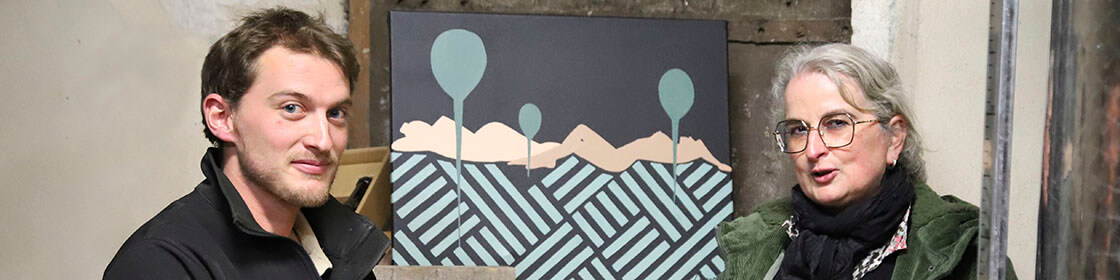
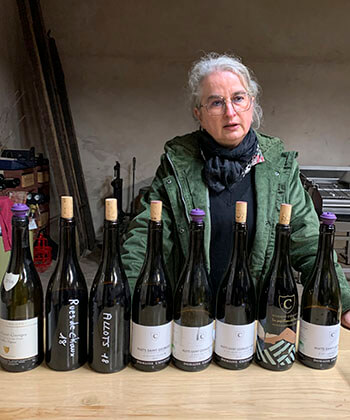
The picture shows Clément and Pascale with the graphic design they've used as the label for the old-vine cuvée 'Papillon de Nuys'.With Nuits Saint Georges one of the worst hit, Dom. Chicotot has next to no volume this year. As a Domaine which is usually so adept at creating joyful, deep, concentrated wines, it is very interesting to see the representation of the other side - these 2024s are lighter, more aromatic and carry a rather exotic profile. Whilst the typical red fruit of 2024 is there, you're also liable to discover orange rind, pomegranate, rose petal and a lovely peppery spice.With Nuits Saint Georges one of the worst hit, Dom. Chicotot has next to no volume this year. As a Domaine which is usually so adept at creating joyful, deep, concentrated wines, it is very interesting to see the representation of the other side - these 2024s are lighter, more aromatic and carry a rather exotic profile. Whilst the typical red fruit of 2024 is there, you're also liable to discover orange rind, pomegranite, rose petal and a lovely peppery spice.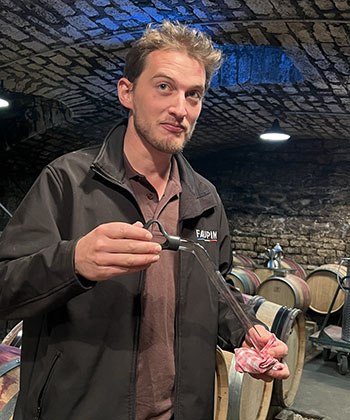
Domaine Faiveley
The Faiveley family are the largest vineyard owners in Burgundy, owning around 120ha, spread across the Côte de Nuits, Beaune and Chalonnaise and encompassing everything from generic Bourgogne up to the grandest of Grand Crus. Their own holdings supply the grapes for 5 out of every 6 bottles made by Faiveley, the balance being bought in from carefully selected contract growers.
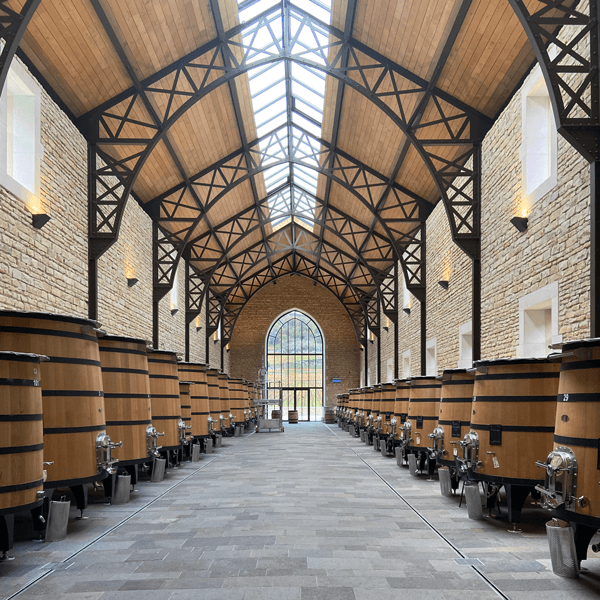
Faiveley has been more and more impressive in recent years, and the combination of winemaker Jérôme Flous and an entirely new winery are taking them onwards and upwards year after year.

Domaine Joseph Drouhin
Joseph Drouhin, founded in 1880 and still family owned, are one of the most well-respected names in Burgundy, especially through their flagship wine, the iconic Clos des Mouches.
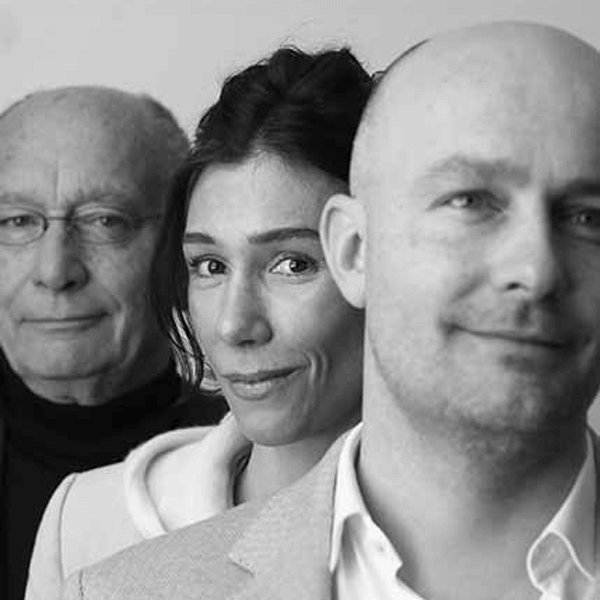
A huge part of the Drouhin production comes from their own domaine fruit (78 hectares), and much of the rest comes from contracts such as that with the Marquis de Laguiche, who shook hands with the grandfather of the current generation, agreeing to let him manage his vineyards which included an important part of Le Montrachet; this collaboration endures. Today, the fourth generation is at the helm
Small refinements continue to be made here. The presses have been changed - a reversion to basket pressing for the reds, and for whites the presses are open - along with a number of other growers they are following the trend to think that slight oxidation of the juice before fermentation is not a problem and may add complexity as well as avoiding later problems of premature oxidation in bottle.
For the reds there has been the introduction of selective whole-bunch fermentation in the Côte de Nuits wines. The house style remains one that 'emphasises the natural elegance of great Burgundies' as they describe it. The domaine is all cultivated with an organic and biodynamic approach.