Côte de Nuits PART 2
Pinot noir is so coveted because it is the great translator. It will tell you the story of terroir more clearly than any other and in 2024, the Cotes de Nuits spoke fully of this unique vintage.
The cooler climate meant red fruits – cranberry, strawberry and raspberry were so frequently found, but also of aromatics, which are high toned and expressive.
It is a vintage which focusses on purity, transparency and terroir expression. Whilst you might not have blockbuster concentration, or decades long cellaring potential, it is made up by a crop of wines which appear… Naked.
It is impossible to talk about the Cotes de Nuits without mentioning yields. You were pushing the limit if you managed to maintain half of your grapes, with many producers losing 80% of their crop. The lowest yields we had reported were just 2 hectolitres per hectare. To finish with the words of Neal Martin – ‘this is an endlessly fascinating vintage that will enamour the small number who imbibe the fruits of much labour’.
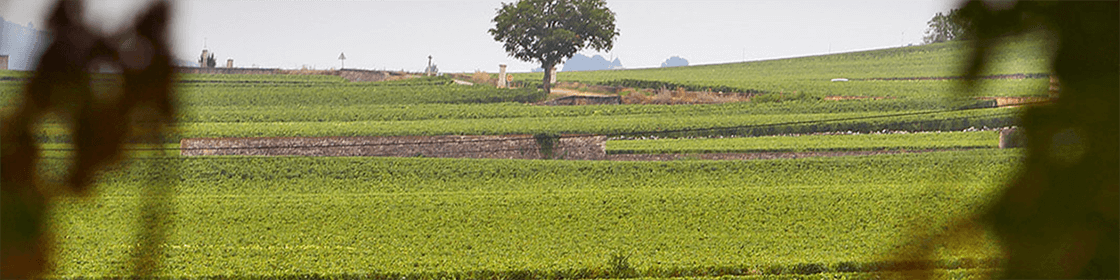
Domaine Henri Boillot
A domaine which dates back to 1885, but which began properly in the early years of the 20th century under the current Henri's grandfather (also Henri). His son, Jean, was the one who really developed it. Henri arrived in 1975 and worked his way up, becoming the winemaker. In 2000 he began the building of the new winery at the bottom of Meursault, and he then bought out his brother and sister to keep the domaine as one, renaming it from 'Domaine Jean Boillot' to 'Domaine Henri Boillot' to avoid confusion with his brother Jean-Marc's domaine.
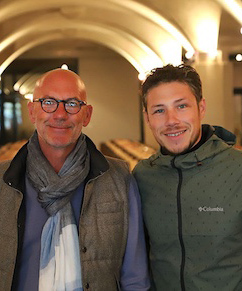
Henri’s son Guillaume who was responsible for the vinification of the reds from 2012 to 2022. Henri continues to make the whites which he likes to be 'straight, taut, precise, pure and elegant'. Guillaume's input resulted in red wines that gained in definition and energy, without losing the luxurious velvety richness and fruit depth that they always had. From 2018 Guillaume expanded his use of vinification intégrale in which the reds are vinified in the barrels they will be aged in - the cellar being equipped with 140 barrels with stainless steel doors in the ends, all made of wood they bought for the purpose, which has been dried for three years. Labour-intensive and time-consuming though it is, Henri and his new oenologist Mireille Malis clearly thought it worth continuing, as now that Guillaume has left to become a négociant in his own right, the domaine has persisted with this method in 2024. Mireille, who was working at Fréderic Magnien, had previous experience with the domaine of the Lycée Agricole in Beaune as well as at Domaine Roederer in California and other stages in Bordeaux (Cheval Blanc) and Burgundy (Bouchard Père et Fils), will no doubt add her own thumbprint - 2024 saw the first use of an optical sorting machine and they are very happy with the results.
The Domaine has roughly equal surfaces of red and white, and of which just under 4ha is the Monopole vineyard of Clos de la Mouchère, a walled enclave within the premier Cru Puligny Perrières. After the 2018 acquisition of small parcels in Latricières and Échezeaux, the Boillots bought the vineyards of Domaine Henri Darnat early in 2019, bringing in a new monopole Clos in Meursault, the Clos Richemont, part of 1er Cru les Cras.
This vintage suited Henri's style exceptionally well. As someone who is always able to put plenty of density into his whites, it was the perfect foil to the more tightly structured 2024s.
In Bond
In Bond
2024 BONNES MARES Grand Cru Henri Boillot
Not tasted on our visit.Not tasted on our visit.L&S (Nov 2025)
In Bond
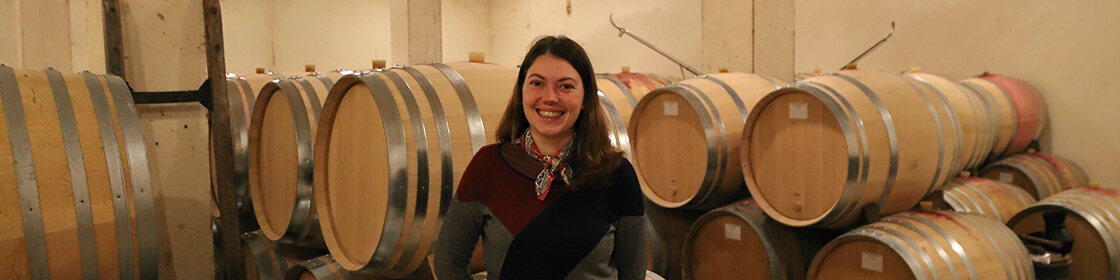
Domaine Christian Clerget
A domaine of 6 hectares, with 8 appellations, run by Christian, Isabelle and their daughter Justine Clerget from their house in the northern end of the little village of Vougeot, which is really in the commune of Chambolle. They have been organic (certified) since 2017, Justine having insisted on it when she joined them, but it sounds as though she was pushing at an open door, because Christian is entirely committed to this approach and clearly believes that good wine starts with the vines.
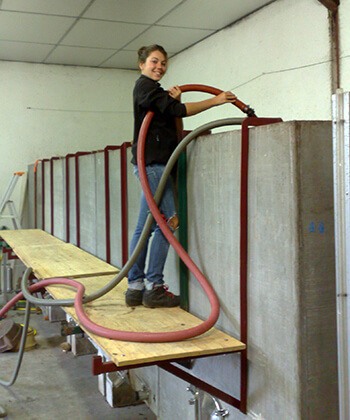
At harvest the grapes are picked into small cases for the short trip to the winery which really is right in the middle of their holdings. They adapt to the vintage conditions, so that they did 2 pigeages in total in 2019, whereas in 2017, they did one a day throughout the fermentation. In 2018 they did some whole bunch fermentation, but reverted to their normal complete destemming in 2019. At the end of the alcoholic fermentation Christian decants into tank, allows the wine to settle for ten days, then puts the wines into barrel where they stay without racking until bottling. They are using about 30% new wood on the villages and 40% on the Chambolle Charmes and the Échézeaux, and the wines stay in barrel for a long élevage of 18-20 months.
Justine cropped just 5hl/h in 2024, a devestatingly small amount, with some cuvees as low as 2hl/h. There will be no Vosne Violettes or Chambolle Aux Croix this year, which due to the small amounts, will be amalgamated into their Chambolle village (which is absolutely stunning). The wines have retained all of their usual levity and charm, but also a rare intensity with the very low yield.Justine cropped just 5hl/h in 2024, a devestatingly small amount, with some cuvees as low as 2hl/h. There will be no Vosne Violettes or Chambolle Aux Croix this year, which due to the small amounts, will be amalgamated into their Chambolle village (which is absolutely stunning). The wines have retained all of their usual levity and charm, but also a rare intensity with the very low yield.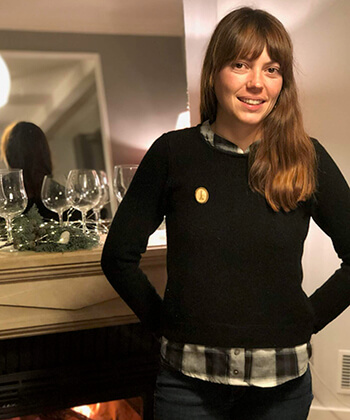
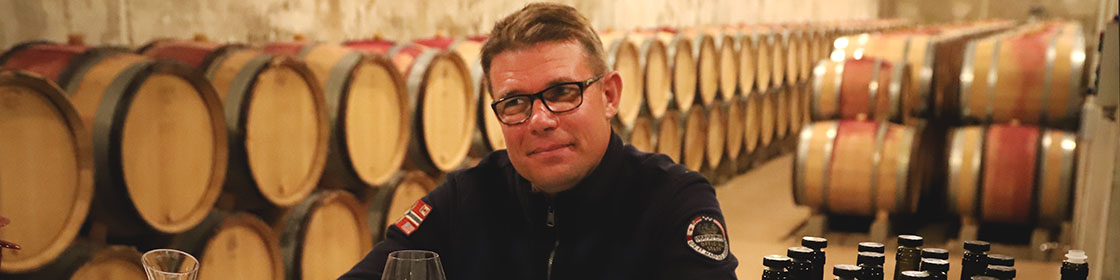
Domaine Anne Gros
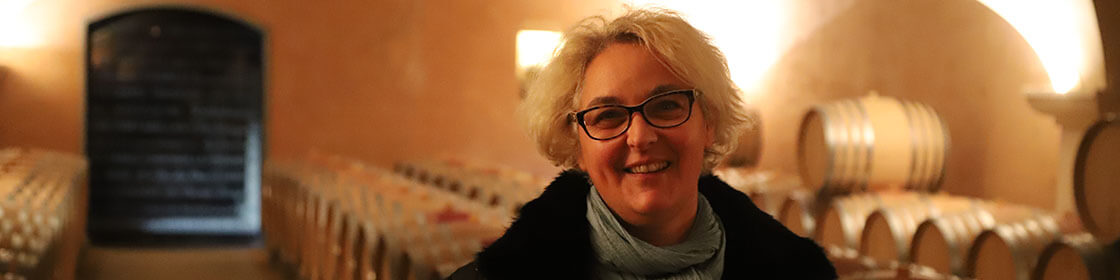
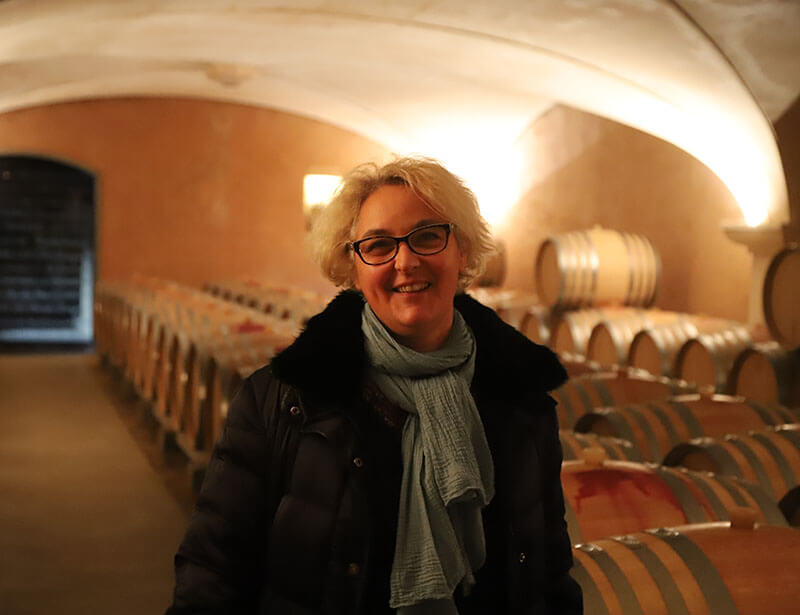
Anne Gros joined her father François at the family domaine in Vosne Romanée in 1988, having given up her arts studies in favour of viticulture and oenology at Beaune and Dijon, she took charge of the domaine in 1995 and has been joined now by 2 of her children Julie since 2015 and Paul since 2017. The Domaine now has 7 hectares of Pinot and Chardonnay. Anne describes herself as being 'wary of certainties and keen to preserve her freedom'.
In the vineyards Anne practises viticulture influenced by organic and biodynamic principles, and the vineyards are ploughed and fertilised with compost, but although she believes that the long-term health of the vineyards are best preserved by such methods, she likes to maintain the freedom to use conventional treatments when necessary.
In the cellar, the wines are classically made, in cement tanks for the reds, and stainless steel for the whites. They are then aged in barrel for up to fifteen months, with 80% new wood for the grand crus, 50% for the village wines and 30% for the regional wines. Anne is quietly meticulous and almost obsessive about cleanliness in her cellar, which perhaps is reflected in the delicacy and restrained tension in her wines, which have aromatic clarity, limpid precision, sheer joie de vivre, lively balance and persistence.
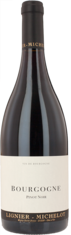
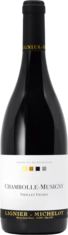
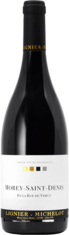
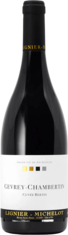
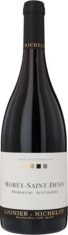
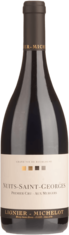
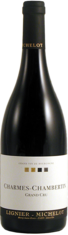
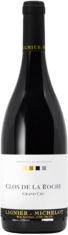
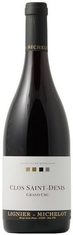
Domaine Lignier-Michelot
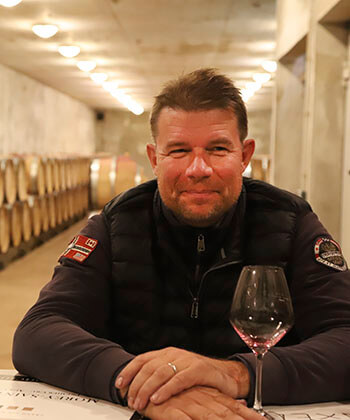
A domaine now of 13.5 hectares, some owned, some in fermage with a little bought in. An average of 290 barrels a year. 25% regionals, 50% Villages, 20% Premiers crus and 5% Grands Crus. Virgile Lignier worked at the domaine with his father Maurice from 1988, beginning to bottle some of the wine from 1992 (it had previously been sold to the négoce), taking over in 2000, which was the vintage when he first bottled all the domaine's production.
In the vineyard Virgile made significant changes, stopping the use of herbicides, and beginning to plough instead. Green harvesting to limits yields followed, along with greater attention to grape selection. The domaine works organically except in extremis, so it's lutte raisonnée.
The wines are made with the least intervention possible, with lots of whole bunches. little extraction (one or two pigeages but mostly he's into remontages, then aged in barrel with 15-20% new wood. They have a lovely combination of enough body and richness, combined with a lively clarity of expression. The old vines village cuvées are seriously good, and great value too. Going up the scale each site seems to speak very clearly of its source and there is a brightness and energy along with full, seamless fruit.
We can say with no hyperbole that Lignier-Michelot made some of the best wine of 2024. His ability to deploy whole bunches, a tricky exercise in this less ripe vintage, was unsurpassed, lending a depth and salinity to the existing taught, red fruit. They are nothing short of mouth watering.
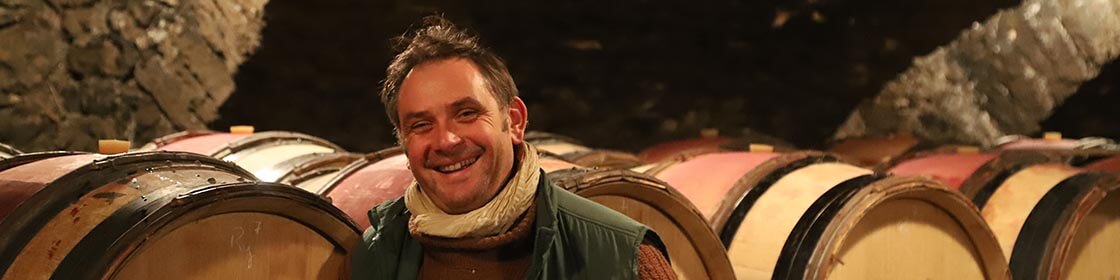
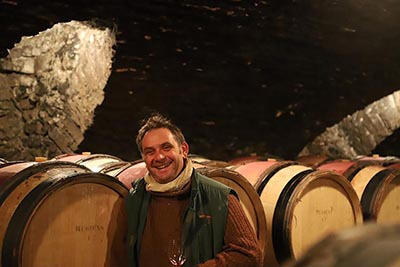
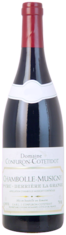
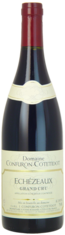
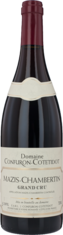
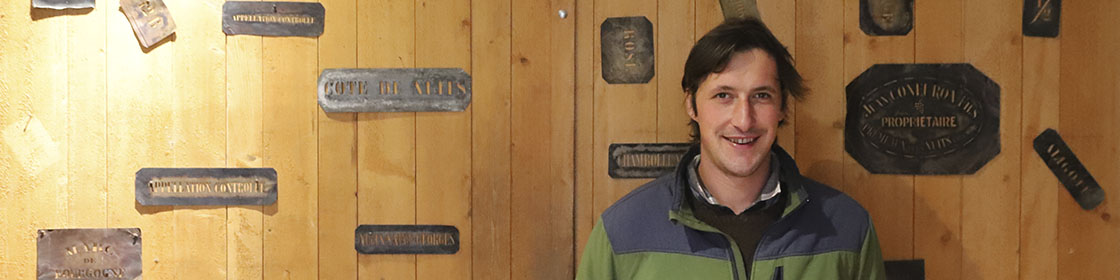
Domaine J. Confuron Cotetidot
Vignerons since the seventeenth century, the Confuron family has always selected and propagated vines to ensure that their plant material produces the highest quality, and they even have a clone of Pinot named after them - 'Pinot Confuron'.
The domaine has several Grands Cru vineyards as well as two hectares of the great Vosne Romanée Premier Cru 'Les Suchots'. There are around 12 hectares in all. The vines have never seen chemical weedkillers, and are ploughed and managed organically.
The Confurons have always used whole-bunch fermentation, picking very late, which really is a necessity if the stems are to be properly ripe and not give green flavours to the wine. A bit like the Thévenets with their whites in the Maconnais, they pick so much later that they can seem to have different vintages to everyone else. Yves thinks that 2007 was their great vintage of the first decade of this millennium, and he'd probably be the only grower in the Cote de Nuits who would say that.
With his particular regime of late picking, Yves Confuron suffered more with low yields than any of our producers - just two 2hl/ha. Fortunately this tiny harvest will rank as one of his best - the extra maturity and deep extraction adding a rare extra layer of concentration to these wines. This vintage yielded one of the most fascinating cuvees - MC2 (squared). A combination of his Clos Vougeot, Charmes Chambertin and Mazis Chambertin, filling just one barrel.
Domaine Jean-Jacques Confuron
Domaine ‘JJ’ Confuron is named after the father of Sophie Meunier, who now runs the domaine with her husband Alain Meunier. Gradually they are handing it over to their son Louis.The domaine goes back to the marriage in 1926 of Jean Confuron de Vosne and Anne-Marie Bouchard de Premeaux, starting with the vines that they both inherited. Together, they acquired more and started selling their own bottled wine in the early 1930s. Jean died in 1965. They had two sons, Christian and Jean-Jacques, who worked together until 1980. Jean-Jacques set up his own estate in 1981, but he died in January 1983. From then on it was his wife Andrée Noëllat and his daughter Sophie who took care of the estate. Sophie met Alain Meunier at the Lycée agricole in Beaune and from the 1985 harvest they worked together. In 1988, Andrée received one hectare of vines from her grandfather Charles Noëllat's domaine, which included the important parcels in Romanée St-Vivant, Nuits Boudots and Vosne Beaux Monts.
Since Louis has taken over the winemaking there have been some changes, but as they have no fixed 'recipe' it is hard to be precise - the levels of new wood seem to have dropped slightly, and like a lot of growers Louis has used some whole-bunch fermentation. On the whole they are relatively early pickers, and the wines have a generous depth of fruit. Although they have been organic since the 1990's Louis is concerned that the soils are still not in the best of health, so he is trying grassing over - but is concerned that this can mean competition for the vines and lower yields. In general he's trying to improve biodiversity in the vineyards, but says that they are going at it by feel, with small changes to see what works - a very practical hands-on approach. He spends 80% of his time tending the vines, and is working to make the plants more resistant to disease and rot.
Louis was surprisingly buoyant during our visit despite having their smallest harvest ever here. In a 'normal' year they would have about 150 barrels of wine - this year it is just 50 - making the cellar are rather sad place to be. He was not able to make all the wines this year - but he has done a fine job with what little juice he had. No whole bunch was used - and he is enjoying the effects of élevage on the 2024s, so these will not be bottled until the Spring of 2026.
Louis was surprisingly buoyant during our visit despite having their smallest harvest ever here. In a 'normal' year they would have about 150 barrels of wine - this year it is just 50 - making the cellar are rather sad place to be. He was not able to make all the wines this year - but he has done a fine job with what little juice he had. No whole bunch was used - and he is enjoying the effects of élevage on the 2024s, so these will not be bottled until the Spring of 2026.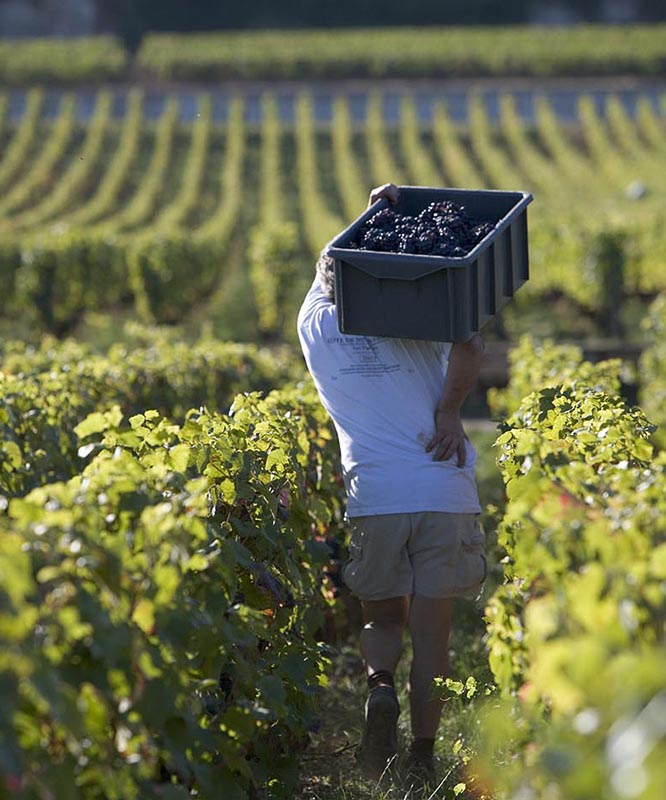
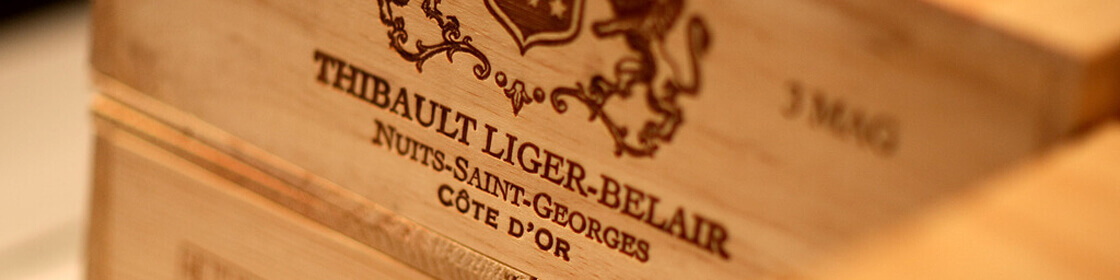
Thibault Liger-Belair Successeurs
The lack of the word 'domaine' in the name signals that this is a négociant wine from Thibault Liger-Belair. Thibault buys the grapes he picks having tended the vines with his own team, so that the wines are domaine wines in all but name.
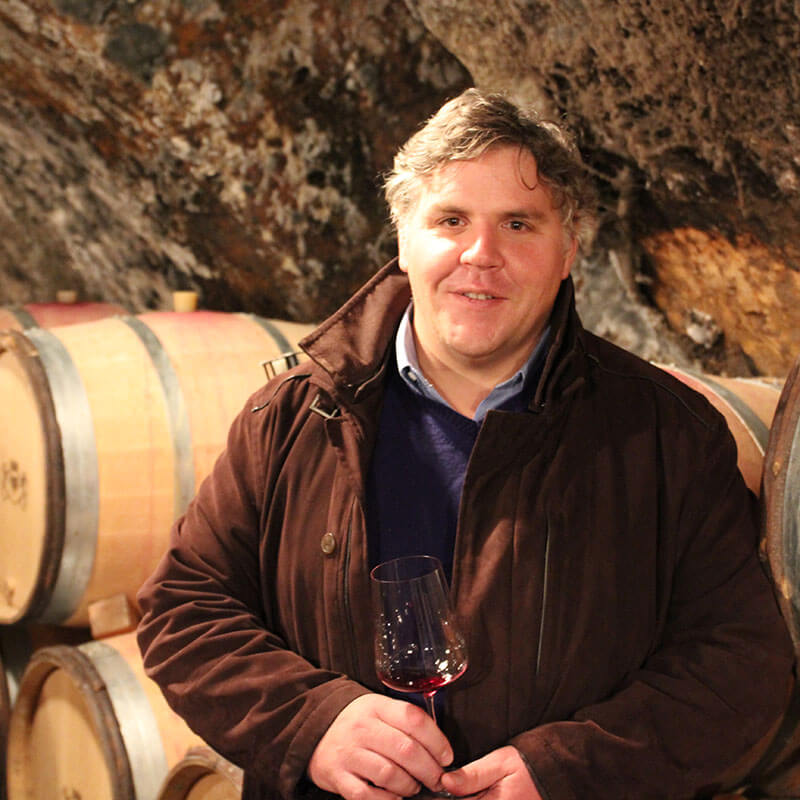
Domaine Thibault Liger-Belair
The steady progression of this domaine has been fascinating to watch as Thibault gradually refines his approach to each parcel of vines. Viticulture is biodynamic (since 2005), yields low but not ludicrously low, everything is pragmatic, so that he should be doing just what is necessary and no more. He uses 40-50% new wood maximum, with wood chosen and aged by him, and barrels made with almost no toasting.
The wines are bright, pure, focused, aromatic and elegant without lacking anything in the way of stuffing. There is a range of wines produced from rented vines or from bought grapes, sold under the separate 'Thibault Liger-Belair Successeurs' label. To each parcel the team brings great experience and there is a coherence across the range, so that the whole enterprise can be regarded as one.
Thibault and his team stayed up until 2am the day they picked his Les Saint Georges, sorting through every bunch by hand to ensure only the best grapes made it to press. This is reflective of just how meticulous he has been in 2024, a vintage in which his volumes were hit incredibly hard. Les Saint Georges in particular was down 86%. What remains are incredibly pure, aromatic and classical expressions of those plots.
Domaine Georges Mugneret-Gibourg
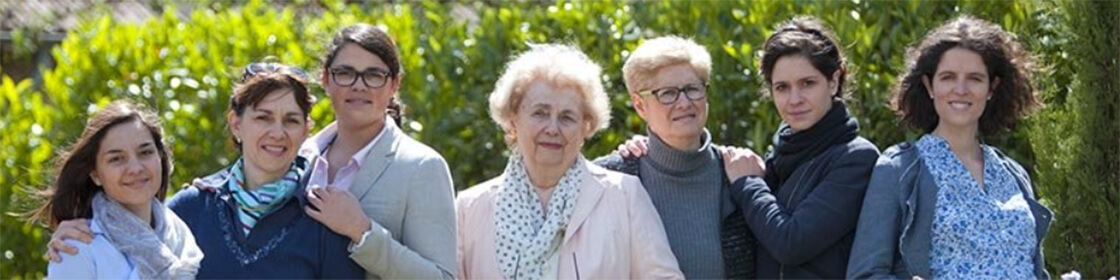
Sisters Marie-Christine and Marie-Andrée have been firmly in control of this exceptional domaine since their mother Jacqueline retired in 2009. With one a pharmacist and the other an oenologist, the domaine was always going to be in safe hands as far as the wine-making was concerned. In 2017 Marie-Christine 's daughter Lucie joined the domaine, and in 2019 the sisters celebrated their 30th vintage - and Marion and Fanny, daughters of Marie-Andrée also joined the team.
These are top-flight Burgundies with that elusive balance of enough concentration allied with delicacy of expression and the capability of ageing well.
Since 2016 they have put a small amount of whole bunches in some of the cuvées, more as a way to have sufficient volume in the vats than because they like the effect.
In a stark comparison, Marie-Andrée Nauleau-Mugneret explained that 2024 was the toughest and smallest harvest they have had since their foundation in the 1930s. They are 80% down globally - the average here is 9HL/HA. In a 'normal' year they have more barrels of Vosne Romanée than they have of everything combined this year..**THE DEMAND FOR THESE WINES FAR EXCEEDS SUPPLY AND THEY ARE ESSENTIALLY ALL ALLOCATED FROM YEAR TO YEAR**