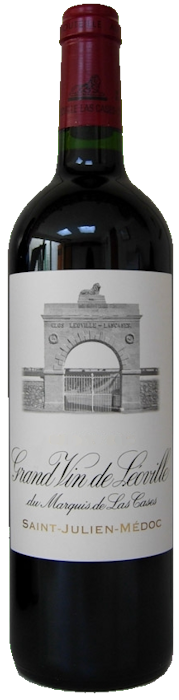
CHÂTEAU LÉOVILLE LAS CASES
2013 2ème Cru Classé Saint Julien Château Leoville Las Cases
In the same sort of line as the Clos du Marquis, with a purer, more lifted fruit on the nose, more aromatically 'pointed'. More graphite and pencil shavings too. Palate rich but not too rich, suave volume with finest tannins, but really just a weighty, supple silk feel, the tannins are just on the edge. Fruit is reserved, but the volume is here. Blackcurrant, spice, damsons, complex and intertwined. - really well done. The finish has more tannin, but it is mouthwatering rather than drying. Rating: 93+ L&S (Apr 2014)
* This is a pre-shipment/primeur offer. All orders are accepted under the TERMS of this offer which differ from the terms of the rest of the site.
The 2013 Léoville Las-Cases has the finest nose of the three Léoville: the best delineation and focus with more complexity and slightly more fruit, though it is still very "classic" in style. The palate is medium-bodied with supple tannins, decent weight, not complex yet harmonious with just a touch of herbaceous that one can easily abide on the finish. Solid. Tasted at Bordeaux Index's 10-Year On tasting. Drinking range: 2023 - 2035 Rating: 91 Neal Martin, www.vinous.com (Aug 2023)
The rule that in difficult vintages you should go to the best estates is more than amply proved here with the 2013 Las Cases. Even the colour takes you far away from the usual expectations of a year when pretty much everything went wrong. The IPT (essentially the tannin count) is lower than usual at 63IPT compared to for example 82IPT in 2016, but there is still a deep plum colour through the glass, although fading a touch on the outer edges. Smoked caramel on the nose, which is unusual in Las Cases, but it's enticing, and the dried roses that you get in older vintages are here already, along with fruit that leans towards raspberry rather than cassis, layered up with gingerbread and turmeric spice, and fresh acidities that give lift rather than bite. Still not a 2013 that I would say put away or cellar, but it's easily one of the wines of the vintage. Jean-Hubert Delon owner. Drinking range: 2023 - 2036 Rating: 92 Jane Anson, Decanter (Jan 2023)
Better than many of the Medoc first-growths, the 2013 Las Cases was harvested relatively late, between October 2 and 17. It is a blend of 74% Cabernet Sauvignon, 12% Merlot and the rest Cabernet Franc. Only 40% of the production made it into the grand vin, and the finished alcohol was 13.1%. It reveals a dense ruby/purple color, supple tannins, good texture and depth, excellent freshness and intense dark currant and black cherry fruit notes. While not a blockbuster, it is a medium-bodied, well-endowed 2013 that should drink well for 10-15 years. 2014-2029 Rating: 89-92+ Robert Parker, The Wine Advocate, www.RobertParker.com (Aug 2014)
(74% cabernet sauvignon, 14% cabernet franc and 12% merlot; 3.69 pH; 13% alcohol; 31 h/h; 85% new oak): Bright ruby-red. Very floral, minty red fruits and minerals on the captivating nose. Then tougher on the palate, with the spicy red fruit flavors kept under wraps by serious tannins and lively acidity. The bright, long finish features very pure floral and red berry nuances. Not the most charming LLC in memory, but a major success for the vintage. I especially like its lovely aromatic nose, which owes a lot to the strong cabernet franc presence, one of the largest percentages ever in this wine (at 50+ years, LLC has some especially old cabernet franc vines, and that makes a big difference on the Left Bank). Keep in mind that the 2008 also had a similarly high percentage of cabernet franc (12%), and I believe that this wine is also one of the stars of its vintage Rating: 89-92 Ian d'Agata - Stephen Tanzer website (May 2014)
The Cabernet Sauvignon that makes up the core of this blend (74%) was surprisingly ripe in 2013. It still has the famous rigour and structure of Las Cases, with bloody, iron-like notes, but there’s more than enough black-fruited flesh on the bones. Very fine. 2020-30 Rating: 94 Tim Atkin MW, www.timatkin.com (May 2014)
(74% cabernet sauvignon, 14% cabernet franc and 12% merlot; 3.69 pH; 13% alcohol; 31 h/h; 85% new oak): Bright ruby-red. Very floral, minty red fruits and minerals on the captivating nose. Then tougher on the palate, with the spicy red fruit flavors kept under wraps by serious tannins and lively acidity. The bright, long finish features very pure floral and red berry nuances. Not the most charming LLC in memory, but a major success for the vintage. I especially like its lovely aromatic nose, which owes a lot to the strong cabernet franc presence, one of the largest percentages ever in this wine (at 50+ years, LLC has some especially old cabernet franc vines, and that makes a big difference on the Left Bank). Keep in mind that the 2008 also had a similarly high percentage of cabernet franc (12%), and I believe that this wine is also one of the stars of its vintage. Rating: 89-92 Ian d'Agata, www.vinousmedia.com (May 2014)
(74 Cabernet Sauvignon, 14 Cabernet Franc, 12 Merlot) With 10% press wine and 85% new oak this is a powerful, dense spicy Las Cases. Pretty good balance but slimmer and more muscular than before. More of a cage fighter than a fencer! There are small flashes of greenness among the cassis fruit which are not off-putting, but they seem to tighten the tannins further making the whole wine seem a bit combative and dry. There is a huge difference in mood between this wine and the lush Clos du Marquis. Rating: 17.5++ Matthew Jukes www.matthewjukes.com (Apr 2014)
74% Cabernet Sauvignon, 14% Cabernet Franc, 12% Merlot. 85% new oak. Beautifully scented and aromatic. Cassis, plum, attractive oak spicing. Fine, polenta-like tannins that coat the mouth but don’t obstruct the rest of the balance. Lots of substance and depth – even so, a litheness that is far lighter than the most famous vintages. 2020-2030 Rating: 17.5+ Richard Hemming MW - www.JancisRobinson.com (Apr 2014)
A touch taut, with a tobacco and cedar overlay to the racy red currant, plum and bitter cherry notes. Shows lovely austerity through the finish, presenting a long echo of cold fireplace. Distinctive. Rating: 91–94 James Molesworth, The Wine Spectator (Apr 2014)
The Grand Vin is a blend of 74% Cabernet Sauvignon, 12% Merlot and 14% Cabernet Franc that includes 9.5% pressed wine and delivers 31hl/ha. It was picked between 2 and 17 October. It has a very classic Léoville Las-Cases bouquet with tobacco-scented black fruit that opens nicely during the time I spend chatting to Jean-Hubert Delon. The palate is medium-bodied with fine acidity, again, a much more fresh and classic take on Las-Cases reminiscent of 1980s vintages such as the 1983 or 1988. Just add "gentleman's club". Rating: 92-94 Neal Martin, www.vinous.com (Apr 2014)
The 2013 Léoville-las-Cases is wonderfully deep and layered in the glass. Violets, cloves, menthol and licorice add dimensions of complexity to the dark fruit. Hints of cassis, white flowers and sweet herbs develop later as the wine continues to flesh out. So many 2013s offer up their charms quite easily. Léoville-las-Cases is a rare wine endowed with a sense of mystery and intrigue. The power and breadth of this site come through, but tempered by the medium-bodied structure of the year. This is a terrific showing. The 2013 is 74% Cabernet Sauvignon, 14% Cabernet Franc and 12% Merlot. Rating: 91-94 Antonio Galloni, www.vinous.com (Apr 2014)
A dense, rich young wine with licorice and spice character. Some tar, too. Medium to full body with firm tannins and a fresh, clean finish. Dense fruit structure for the vintage. Rating: 92-93 James Suckling, www.jamessuckling.com (Apr 2014)
Château Léoville Las Cases
St Julien Deuxième cru 1855 One of the leading "super-seconds" - a second growth chateau who's wines rival, in terms of quality and often price, the fabled First Growths of the Haut-Médoc. Before the Revolution, the Leoville estate was one of the largest and grandest in the region. At the time, it was in the aristrocratic ownership of the family of the Marquis de Las-Cases-Beauvoir. Unsurprisingly, the Marquis had to flee. To avoid Leoville being seized, the family decided to sell up but the complicated ownership of the estate, which was split between siblings, prevented the sale of Leoville as a whole and, in the end, only a small portion was sold off, to Hugh Barton, and this became Château Leoville Barton. The remainder of the estate came back to the Marquis' family when his son, Pierre-Jean, inherited most of Leoville, the only exception being a small portion inherited by his sister Jeanne. Jeanne's daughter married Baron Jean-Marie de Poyferré and, in 1840, this portion of the estate sheered off to become Château Leoville Poyferré. To stop further divisions among inheriting children, a holding company was founded to own Château Las Cases. Théophile Skawinski, who managed the estate, bought some shares which later passed to his son-in-law André Delon. The Delon family continued to buy share as they became available until, eventually, they became the owners of Château Leoville Las Cases. The bulk of Las Cases's vineyards - the Grand Clos - sit at the very northern end of St Julien, facing Château Latour across the Ruisseau de Juillac. The vines are planted to 65% Cabernet Sauvignon, 19% Merlot, 13% Cabernet Franc and 3% Petit Verdot. The hand-picked grapes are fermented in an unusual array of wooden, stainless-steel and cement tanks. Wines spend 20 months in oak, with the proportion of new wood for the grand vin varying from 50% to 100% depending on the vintage. Château Leoville Las Cases have one of the most highly regarded "second wines" in Bordeaux - Clos du Marquis. The first vintage was in 1902, long predating most of its competitors. Its status as a true "second wine" is sometimes disputed, as there is a distinct Clos du Marquis vineyard, a little way to the west of the Grand Clos, although the cuvée does include some declassifications from the grand vin and fruit of younger vines. Its status as a "second wine" also belies the quality which exceeds many of the region's "first" wines.
Please make sure that you have read the terms of this offer which are different from those of the main website. If you are unclear as to what is involved in primeur purchases please do call us, but see the 'practical notes' below.
Ordering
Prices are per case as listed 'in bond London'.
Pre-Orders are a firm commitment from you to buy the wines you order on release, subject to the price being below the upper price of the estimated band on our website. You may also set your own upper price limit, lower or higher than ours. Pre-orders will be fulfilled subject to availability. Providing this firm commitment to us effectively gives you priority.
Wines listed on the website (after any pre-orders and allocations have been fulfilled) can be ordered in the usual way via the website order form or by email or telephone 020 7221 1982, always subject to stock remaining.
Confirmation
All orders will be confirmed by email and are contractually binding unless written cancellation is received within seven days of the confirmation date, apart from pre-orders which are binding if the release price is below the top estimate or other price you have set.
Invoices are raised at the In Bond price, excluding any duty and VAT which will become payable at the prevailing rates on arrival of the wine if required duty paid.
Payment is required on sight of invoice, by cash, cheque, debit card or credit transfer. We reserve the right to charge 2% per month on invoices unpaid after 30 days.
Delivery
- Shipment to our bond (LCB Creek Road) and insurance are included in the in bond price.
- Delivery is free to Lea and Sandeman / Elephant storage accounts, both duty paid and in bond.
- Other deliveries (In Bond and Duty Paid) are also free subject to a minimum order from the offer of £1000, orders below this total will be charged £16.50+ VAT when the wine invoices are issued. We will group deliveries and this is a charge for your entire purchases, not a per-case charge.
- Delivery for 2016 Bordeaux primeurs will probably be completed by October 2019, but we make no guarantee as to specific delivery times, and some of the Sauternes may be later.
Practical notes - how it works
We start a sale in each customer's name and add all their primeur orders to one sale which is invoiced at the end of the campaign (or when the customer wishes) for immediate payment. We and our customers find that having a single invoice for the vintage is the simpler option, but do please note that confirmed orders are still binding as above even if the final invoice has not been issued.
When the wine is shipped, unless previously specified we will assume that delivery is to be to bonded storage with Elephant Storage, but in any case, we will contact you requesting any alternative instructions. If you have another bonded delivery address you would like the wine to go to, please tell us at the time of ordering. If the wines are required duty-paid we will issue invoices at the rates prevailing at the time for the excise duty (currently £25.98 per case) and the VAT (currently at 20%) on the total of the wine cost and the duty.
Half-bottles, Magnums and larger bottles.
One of the additional advantages of buying en primeur is being able to order the wine in the bottle size you want. Even if a wine is only listed in one size, you can order any bottle or case size you want if the property supplies it, but you must order the case/bottle size you require and check that the correct size has been invoiced.
Additional charges are as follows:-
- +£15 per case of 24 half-bottles
- +£15 per case of 6 Magnums (2 bottles equivalent, 1.5 litres each)
- +£35 per individually boxed Double Magnum (4 bottles equivalent, 3 litres)
- +£45 per individually boxed Imperial (8 bottles equivalent, 6 litres) for Salmanazars, Balthazars, Nebuchadnezzars and Melchiors please enquire for availability and price.