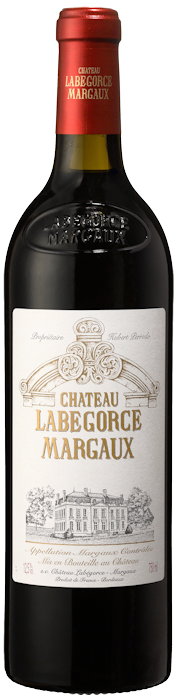
CHÂTEAU LABÉGORCE
2016 Cru Bourgeois Supérieur Margaux
We heard hints that this was very good in 2016 which suggested they have a lot of it to sell. The first part is true. It was very good indeed. The second part is sadly not true. There isn't a huge amount at all. Buying recent back vintages is well nigh impossible, testament to its popularity. Dark, voluptuous black cherry fruit, sweet and vivacious. Good grip and acidity. The most ambitious wine yet from the team that took over here from 2010, with more density and richness. Looks likely to be one of Margaux's stand out value buys. Hurry hurry though. Rating: 91-93 L&S (Apr 2017)
* This is a pre-shipment/primeur offer. All orders are accepted under the TERMS of this offer which differ from the terms of the rest of the site.
Concentrated but restrained with old school charm and an abundance of muscular tannins, it's easy to feel the heart of this wine, packed with liqourice, slate, black chocolate, cassis, brambled hedgerow, aniseed and fennel, with plenty of grip. Years ahead of it, an impressive wine in this exceptional vintage, offering good value. Harvest September 4 to October 21. 50% new oak, technical director Marjolaine de Coninck. Drinking range: 2024 - 2040 Rating: 94 Jane Anson, Decanter (Mar 2023)
The 2016 Labégorce has a more introspective bouquet than its peers – a bashful Margaux, although with time I suspect it will gain more intensity. The palate is medium-bodied with grippy tannins, a little pinched toward the second half, with cedar and graphite on the aftertaste. Broody at the moment - cellaring required. Tasted blind at the Southwold tasting. Drinking range: 2024 - 2050 Rating: 92+ Neal Martin, www.vinous.com (Aug 2020)
From an estate on the uptick and showing beautifully on two separate occasions, the 2016 Château Labégorce is a head-turner of a Margaux that’s based on 52% Merlot, 38% Cabernet Sauvignon, and the rest Cabernet Franc and Petit Verdot that was brought up in 45% new oak, with the balance in once-used barrels. Sexy notes of blackcurrants, black raspberries, crushed flowers, sandalwood, and incense all flow to a medium to full-bodied, fabulously textured Margaux that carries ripe tannins, loads of fruit and richness, and a great finish. Since arriving in 2009, Marjolaine de Coninck has resurrected this estate and the wines now play with the top in the appellation. Give bottles 3-5 years and enjoy over the following two decades or more. Drinking range: 2022 - 2042 Rating: 94 Jeb Dunnuck, www.jebdunnuck.com (Feb 2019)
The 2016 Labégorce is a dense, potent wine. There is plenty of depth to the copious blackberry jam, plum and chocolate flavors. Rich and forward, the 2016 will drink well with minimal cellaring. I thought the 2016 was a bit more exciting from barrel, but this is nevertheless very nicely done. Drinking range: 2020 - 2030 Rating: 90 Antonio Galloni, www.vinous.com (Jan 2019)
The 2016 Labegorce is a blend of 38% Cabernet Sauvignon, 52% Merlot, 6% Cabernet Franc and 4% Petit Verdot picked between 4-21 October and matured in 45% new oak. What I like about the bouquet is that it is quintessential Margaux--it could not come from anywhere else. Crushed violets infuse black cherries, blueberry and iodine. The palate is medium-bodied with supple tannin, very well-judged acidity, an elegant and very charming Margaux with pencil lead and a touch of spice on the long finish. What a brilliant wine from a Margaux estate that has really upped its game. Drinking range: 2026 - 2055 Rating: 94-96 Neal Martin, www.vinous.com (Apr 2017)
Very scented. Maybe slightly tarty but it delivers lots of flashy fruit. It does seem almost too sweet to me and the oak is not yet fully integrated. Drinking range: 2024 - 2038 Rating: 16.5 Jancis Robinson OBE MW - www.JancisRobinson.com (Apr 2017)
Fresh, featuring a racy edge of mesquite that melds with the energetic plum and boysenberry fruit flavors. Stays focused through the finish, picking up alluring spice notes. Rating: 91-94 James Molesworth, The Wine Spectator (Apr 2017)
This may be the best Labégorce ever. Full-bodied and dense yet vivid and energetic. Greatness in the making. Rating: 94-95 James Suckling, www.jamessuckling.com (Apr 2017)
Deep, rich extraction, black cherry in colour with very well controlled aromatics of damson and creamy cappuccino. This is a gorgeous wine and there are going to be many many fans of the contemporary but utterly controlled and well judged flavours on display here. Luscious and big, but everything has a reason for being where it is, nothing superfluous. One of the best ever from this property. Drinking range: 2027 - 2045 Rating: 93 Jane Anson, Decanter (Apr 2017)
The 2016 Labégorce is terrific. Pliant, supple and accessible, it offers considerable near- and medium-term appeal in a pliant, juicy style. Dark red fruit, grilled herbs, smoke, licorice and tobacco all flesh out nicely. The 2016 is powerful and dense, but also comes across as a bit less heavy than in the past. It will be interesting to see if that is more related to the vintage or a slightly stylistic shift. Time will tell. Rating: 89-91 Antonio Galloni, www.vinous.com (Apr 2017)
There’s quite a bit of oak on this ambitious, well-structured red blend, but it’s a wine that’s made for a middle distance race rather than sprint. The tannins are well judged, built around a core of red fruits, tobacco spice and tangy acidity. Drinking range: 2024 - 2030 Rating: 92 Tim Atkin MW, www.timatkin.com (Apr 2017)
The 2016 Labégorce has a more introspective bouquet than its peers – a bashful Margaux, although with time I suspect it will gain more intensity. The palate is medium-bodied with grippy tannins, a little pinched toward the second half, with cedar and graphite on the aftertaste. Broody at the moment - cellaring required. Tasted blind at the Southwold tasting. Drinking range: 2024 - 2050 Rating: 92 Neal Martin, www.vinous.com (Dec 1899)
Château Labégorce
Nathalie Perrodo brought her father's dream to reality with the 2010, the 'first' vintage from the newly reunited Labégorce vineyards, after they had spent a couple of centuries split into three. The Labégorce vineyard seems to have been named after an Abbé Gorsse, but the truth is somewhat shrouded in mystery. Feret, in his edition of 1865, mentions the existence of the noble La Bégorce house in Margaux from 1332. The estate was split into three after the revolution. The part that was named Labégorce Zédé in 1840 was reintegrated for the first time since then in 2010. Hubert Perrodo bought Labégorce in 1989, and the buildings of l'Abbé Gorsse de Gorsse in 2002 (the vineyard of this one escaped him, bought by Château Margaux). But his dream of re-uniting the historic Labégorce estate after he bought Labégorce Zédé in 2005 was cut short by his death in a ski-ing accident at Courchevel in 2006. After a couple of years of reflection, his twenty-five year-old daughter Nathalie has taken up the challenge of continuing his work, directing this really quite large domaine which also includes the fifteen hectares of the Cru Classé Château Marquis d'Alesme.
Please make sure that you have read the terms of this offer which are different from those of the main website. If you are unclear as to what is involved in primeur purchases please do call us, but see the 'practical notes' below.
Ordering
Prices are per case as listed 'in bond London'.
Pre-Orders are a firm commitment from you to buy the wines you order on release, subject to the price being below the upper price of the estimated band on our website. You may also set your own upper price limit, lower or higher than ours. Pre-orders will be fulfilled subject to availability. Providing this firm commitment to us effectively gives you priority.
Wines listed on the website (after any pre-orders and allocations have been fulfilled) can be ordered in the usual way via the website order form or by email or telephone 020 7221 1982, always subject to stock remaining.
Confirmation
All orders will be confirmed by email and are contractually binding unless written cancellation is received within seven days of the confirmation date, apart from pre-orders which are binding if the release price is below the top estimate or other price you have set.
Invoices are raised at the In Bond price, excluding any duty and VAT which will become payable at the prevailing rates on arrival of the wine if required duty paid.
Payment is required on sight of invoice, by cash, cheque, debit card or credit transfer. We reserve the right to charge 2% per month on invoices unpaid after 30 days.
Delivery
- Shipment to our bond (LCB Creek Road) and insurance are included in the in bond price.
- Delivery is free to Lea and Sandeman / Elephant storage accounts, both duty paid and in bond.
- Other deliveries (In Bond and Duty Paid) are also free subject to a minimum order from the offer of £1000, orders below this total will be charged £16.50+ VAT when the wine invoices are issued. We will group deliveries and this is a charge for your entire purchases, not a per-case charge.
- Delivery for 2016 Bordeaux primeurs will probably be completed by October 2019, but we make no guarantee as to specific delivery times, and some of the Sauternes may be later.
Practical notes - how it works
We start a sale in each customer's name and add all their primeur orders to one sale which is invoiced at the end of the campaign (or when the customer wishes) for immediate payment. We and our customers find that having a single invoice for the vintage is the simpler option, but do please note that confirmed orders are still binding as above even if the final invoice has not been issued.
When the wine is shipped, unless previously specified we will assume that delivery is to be to bonded storage with Elephant Storage, but in any case, we will contact you requesting any alternative instructions. If you have another bonded delivery address you would like the wine to go to, please tell us at the time of ordering. If the wines are required duty-paid we will issue invoices at the rates prevailing at the time for the excise duty (currently £25.98 per case) and the VAT (currently at 20%) on the total of the wine cost and the duty.
Half-bottles, Magnums and larger bottles.
One of the additional advantages of buying en primeur is being able to order the wine in the bottle size you want. Even if a wine is only listed in one size, you can order any bottle or case size you want if the property supplies it, but you must order the case/bottle size you require and check that the correct size has been invoiced.
Additional charges are as follows:-
- +£15 per case of 24 half-bottles
- +£15 per case of 6 Magnums (2 bottles equivalent, 1.5 litres each)
- +£35 per individually boxed Double Magnum (4 bottles equivalent, 3 litres)
- +£45 per individually boxed Imperial (8 bottles equivalent, 6 litres) for Salmanazars, Balthazars, Nebuchadnezzars and Melchiors please enquire for availability and price.